
Healthy skin is always balanced skin? Easier said than done.
Many of our skincare concerns must do with skin behavior that is not 100% under our control, thanks to our predetermined skin type. Much like a body type, we don’t get to choose it, and we’re essentially born with it. But with some skincare tips, we can help troubleshoot your way to healthy, glowing skin – no matter your skin type!
Today we’ll be diving into the five most common skin types, sharing the characteristics of each. We’ll be talking more about how to choose the right skincare products and explaining how you can find your skin type at home.
Skin types are determined by genetics. Your genes determine the amount of oil your sebaceous glands produce, the size of your pores and the texture of your skin. Each of these factors contributes to the overall dryness or oiliness of your complexion. While your skin type cannot be changed, it can be easily managed with proper skin care.
Knowing Your Skin Type
Before creating a skin care routine, it is important to identify your skin type. This will help you choose the right products and address specific skin concerns effectively. Skin types generally fall into one of five variations:
- Normal Skin
- Dry Skin
- Oily Skin
- Combination Skin
- Sensitive Skin
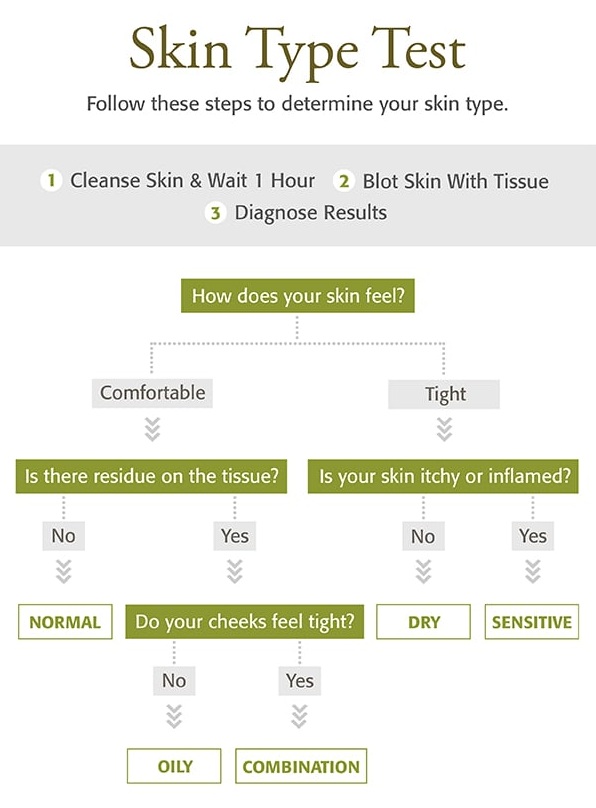
Skin Type Test
Are you unsure of your skin type? This skin type test is an easy way to determine whether you have normal, dry, oily, combination or sensitive skin.
Normal Skin
“Normal” skin is best described as well-balanced. It has even moisture and hydration and uniform texture, with small pores and no apparent problem areas. Those with normal skin types may experience occasional dryness or oiliness as well as the odd breakout. Overall, normal skin looks and feels healthy but may experience mild dryness or oiliness as well as the occasional breakout, particularly when exposed to environmental stress.
For this reason, a normal skin care routine should focus on keeping skin healthy and protected. In addition to fortifying the skin with antioxidants, make minor adjustments to your routine depending on concerns and conditions of the moment. During periods of dryness, opt for products aimed toward dry skin; for oiliness and/or breakouts, choose products that will balance your complexion and target blemishes.
- Even moisture and hydration
- Uniform Texture
- Small pores
- No apparent problem areas
Dry Skin
On the far other end of the skin spectrum, dry skin types have little to no sebum and need all the hydration they can get. Dry skin lacks the necessary lipids and natural oils to retain moisture, resulting in a complexion that may appear dull, rough, or flaky. This skin type is prone to early signs of aging like fine lines and wrinkles.
Dry skin produces less oil than normal complexions. This skin type lacks the lipids needed to retain moisture and keep skin soft and supple. Skin feels dry and tight, and flakes sometimes appear on the cheeks, chin and forehead. Those with dry skin often have nearly invisible pores and may display more prominent fine lines around the eye and lip contour areas.
Highly moisturizing and hydrating products with anti-aging ingredients as well as a rich night cream to repair skin while you sleep are beneficial for dry skin, aiming to replenish the skin’s moisture barrier and impart a healthy, youthful glow. Weekly moisturizing masks are also advised to plump and soften skin as well as reduce the appearance of fine lines and wrinkles.
- Insufficient sebum production
- Rough and flaky texture
- Barely visible pores
- More prominent fine lines and wrinkles
Oily Skin
As its name suggests, oily skin is characterized by an overproduction of sebum – the skin’s natural oil. You’ll notice a shiny or slick texture on the surface of your face, most common in what’s called the T-zone (forehead, nose, and chin), due to excess oil production.
While a certain amount of oil is healthy and necessary to keep the skin supple and balanced, an excess of oil can lead to a shiny and greasy complexion, enlarged pores, and a higher likelihood of clogged pores and acne. Fine lines and wrinkles do not show as easily on this skin type, but it does need to be maintained to prevent breakouts and control shine.
This skin type benefits from non-comedogenic products that won’t clog pores, as well as purifying and hydrating ingredients that help balance sebum production.
The goal for an oily skin care routine is to control excess oil and maintain skin’s hydration. When dehydrated, skin will react by producing more oil; you can counteract this activity by hydrating skin with a lightweight moisturizer containing humectants like botanical hyaluronic acid. Also, consider adding an oil cleanser to your skin care routine. While it may seem counterintuitive, the oil in the cleanser will attract excess sebum, allowing you to rinse it away without stripping your skin.
- Excess sebum production
- Oily texture
- Large and visible pores
- Prone to breakouts
Combination Skin
Combination skin is like a random patchwork; it’s somewhat dry, sort of normal, occasionally oily skin all pieced together. Typically, the forehead, nose, and chin may be oily, while the cheeks and other parts of the face may be dry or normal.
The most important thing about combination skin is that it doesn’t always behave the same. This skin type can be challenging to manage due to its dual nature, but where there’s a ‘skin’ will, there’s a way!
This skin type benefits from products that can both purify and balance the different facial zones – plus add hydration to drier areas. The best approach for combination skin care is often to divide and conquer, treating different parts of the face with different products and techniques. For morning, a gentle foaming cleanser will absorb excess oil. At night, a cream-based cleanser will replenish lost moisture.
Multi-masking can be extremely beneficial for combination skin. This skin care technique involves applying two or more face masks, such as a clay-based mask and a cream-based mask, to different areas of the face so that multiple concerns are addressed at once.
- Non-uniform sebum production
- Variable pore size
- Oily T-zone
- Normally/dry on cheeks, jawline and hairline
Sensitive Skin
Sensitive skin is like the crybaby of the types. This skin type has fine pores, can be easily irritated and is prone to redness, itching, burning, or dryness. Often, it will react negatively to poor lifestyle habits, dietary factors, climate and weather changes, hormonal imbalances, skincare products and cosmetics. With its wide variety of symptoms, sensitive skin does not manifest the same way for everyone, and its severity and frequency can vary.
People with sensitive skin need to be particularly mindful of the ingredients in their skincare products, as harsh chemicals can strip skin or irritate skin, provoke flare-ups or allergic reactions. As a result, it’s recommended to lean towards hypoallergenic, fragrance-free, and natural products when possible. In general, sensitive skin should be treated with gentle and soothing skin care products that will heal skin and relieve symptoms. Opt for gentle peels to exfoliate without exacerbating sensitivity, and reach for calming natural and organic ingredients like chamomile, aloe vera and calendula to comfort reactive skin.
- Compromised lipid barrier
- Prone to inflammation and irritation
- Often displays signs of redness
- Reacts to fragrance and harsh ingredients
Can your skin type change over time?
Your skin type can change over time due to a variety of factors, like age, environment, skincare products, stress, hormones, diet, and lifestyle. It is essential to observe your skin every day to notice if there is a change in your skin type so you can adjust your skincare routine accordingly for optimal results.
How often should I reassess my skin type?
In the same way you refresh your wardrobe and skincare regimens when the seasons change, your skin type should also be reassessed to determine if certain factors – even those out of your control – may have affected your particular skin type. Early on, it’s best to start with the changing seasons to determine if your skin type has changed.
How do seasonal changes affect skin type and product choice?
First and foremost, all skin types need extra hydration no matter the season. As we know, different seasons and temperatures call for certain skincare routines that are built around your skin type and concerns. For instance, heat and humidity can cause an increase in oil production, so may want to switch to a lighter-weight moisturizer for your summer skincare routine.
What’s the best way to test a new product for my skin type?
Performing the test shown above is a crucial step before incorporating any new skincare product into your routine.