
The splendor of the world is always equal to the splendor of the spirit that observes it. — Heinrich Heine
Beauty is everything that inspires admiration, brings joy, and fills the soul with warmth. It’s all around us — we just need to notice and appreciate it. The world is full of beauty, from the simple moments of everyday life to the deeper connections we form with others.
The Everlasting Questions: What is beautiful and what is ugly? What is good and what is evil? These are the eternal questions that have puzzled humanity. Beauty, while absolute, is something we inch closer to understanding as we delve deeper into aesthetics.
The Essence of Beauty
Beauty, in all its glory, is an aesthetic marvel that denotes perfection, a harmonious blend of elements that brings aesthetic pleasure to the beholder. While “beauty” itself is a lovely concept, its grander cousin, “the beautiful,” takes things up a notch, representing the highest degree of aesthetic delight.
Beauty is the harmonizing principle that balances chaos, a great middle ground in purposeful universality, as universally appealing as a statue. It’s easy to see that beauty is the right line in the unity and struggle of opposites, the very middle between two sides of any phenomenon or thing, a concept the ancient Greeks recognized and called ariston — the best — equating it with measure, or more precisely, a sense of proportion.

We imagine this sense of measure as something extremely delicate — like a razor’s edge — because finding it, achieving it, and maintaining it is often as challenging as walking along a razor’s edge, almost invisible due to its sharpness. But that’s another matter. The main point we wanted to make is that there is an objective reality rooted in geometric perfection, perceived by us as absolute beauty. Whether one agrees or not is up to them, but denying the obvious is pointless. Yes, there is an objective reality — absolute beauty. And yes, everyone has their own taste. Perhaps it is in this that the philosophical “combination of contradictory elements” lies.
Indeed, the measure of beauty is as fine as a razor’s edge, and this is why humanity has always known and will continue to know what beauty is, yet each person will endlessly debate, defending their own viewpoint on the matter. In this, too, one can see the “combination of contradictory elements” and the “law that balances chaos.”
And if the best is what lies along the narrow line between two extremes, then beauty is the best thing granted to humanity for understanding the true grandeur of the world around us.
Perception of Beauty and Aesthetics
What is the difference between beauty and aesthetics?
Beauty is a quality that brings pleasure to a person through sight, hearing, or even taste. Aesthetics, on the other hand, is a branch of philosophy that deals with understanding beauty. Beauty is typically created by nature or through some form of art, including painting and sculpture.
Beauty is an aesthetic, non-utilitarian, and non-practical category that signifies perfection—a harmonious combination of aspects of an object that evokes aesthetic enjoyment in the observer.
Aesthetics is the science that studies beauty, harmony, and the aesthetic perception of the world. It explores various aspects of beauty, such as art, architecture, fashion, design, music, and more. The primary task of aesthetics is to understand what makes an object or phenomenon beautiful or unattractive and how this influences our perception of the world.
Aesthetics also examines how people respond to different objects and phenomena and how this knowledge can be used to create beautiful and functional objects. There are many directions and approaches within aesthetics for studying beauty. Some focus on elements like color, shape, texture, light, and shadow, while others investigate the use of various materials and technologies to craft beautiful objects.
Interestingly, the etymology of the word aesthetic is actually derived from the Greek word aesthetikos. This refers to the sense of perception. Perception itself has been linked to the imagination – the experience of art. It’s a very broad term that links not just the arts but also to nature. Modern aesthetics was coined by Baumgarten in Aesthetica in the year 1715. It’s important for us to appreciate that various philosophers have examined this topic of aesthetic judgment. This also includes our assessments of aesthetic value from a fundamental perspective.

Aesthetic judgments link to our senses. What we term as beautiful versus less beautiful links to how our senses are able to discriminate between the two. Two different philosophers have had different perspectives on this same topic. David Hume, for example, referred to the differences in our aesthetic judgments as not just the pleasurable aspects of a composition, but also how sensitive we are to pick up on the less pleasurable aesthetic value of the same composition.
In its aesthetic perception, the concept of beauty is closely related to the concept of the sublime, with the distinction that the latter represents the highest degree of beauty. Unlike the sublime, which is an ideal in aesthetics, the perception of beauty in everyday life is not separated from the overall perception of the surrounding world. Instead, it serves as an emotional-aesthetic continuation of the general picture created for a person by their senses. Art, nature, and material and spiritual creations are evaluated based on the principles of purposefulness and beauty.
An Invention of the Mind — Intelligent Beauty
Much of what we find beautiful is highly subjective. However, experts who have interviewed large numbers of people and analyzed some of the world’s most revered works of music, art and architecture have identified common attributes among the things we find beautiful. These universal qualities include simplicity, pattern, rhythm, symmetry, certain juxtapositions of colour, specific combinations of musical notes and physical elements arranged in certain ratios and geometries.
But why do we experience beauty at all? Does it have a purpose? The leading theory is that we’re hardwired to appreciate forms and patterns that are pervasive in nature, such as fractals, the Golden Ratio and symmetry, because they helped our ancestors survive.
A symmetrical face, for instance, suggests good health and strong genes in a potential mate. Our brains recognize plants that grow in fractal patterns as healthy and safe to eat, and make us wary of those that grow askew. Things that help us survive activate the reward center in our brain, inducing feelings of pleasure and, in doing so, cause us to attach value to them. There is an objective reality in geometric perfection that we perceive as absolute beauty.
There’s a whole cottage industry of books, DVDs, and television specials devoted to the mystery of the golden ratio – an irrational number thought to be manifest in such beautiful things as nautilus shells, da Vinci paintings, and rose petal arrangements. Sitting as it does at the intersection of art and science, this lovely proportion has inspired many theories of why it strikes humans as beautiful.
Now, as the Guardian reports, a scientist at Duke University thinks he has solved it. The reason we love the golden ratio, he argues, is that it’s easy to grasp. According to Adrian Bejan, professor of mechanical engineering at Duke University, in Durham, North Carolina, the human eye is capable of interpreting an image featuring the golden ratio faster than any other…. Whether intentional or not, the ratio represents the best proportions to transfer to the brain.
“This is the best flowing configuration for images from plane to brain and it manifests itself frequently in human-made shapes that give the impression they were ‘designed’ according to the golden ratio,” said Bejan.
An object whose proportions are based on the principle of the golden ratio is visually perceived as perfect. This ratio was borrowed from nature itself: it can be found in the forms of plants, animals, and even the human body. That’s why there’s another, more poetic name for it — “Divine Proportion.” Every beautiful line, shape, or combination is a purposeful solution, crafted by nature over millions of years of natural selection or discovered by humans in their quest for beauty — that is, the most fitting form for a given thing.
There is also subjective beauty, shaped by personal tastes. Agree or disagree, but denying the obvious is futile. Yes, there is absolute beauty, and yes, everyone has their taste. Perhaps this is the philosophical “combination of contradictory elements.”
The issue of individual taste is also relevant here. Taste itself is influenced by one’s cultural, social values, and also what is transmitted via our education. Philosophers have evaluated how society elites define taste. That it is influenced by one’s socio-cultural influences. Emmanuel Kant, for example, says that aesthetic beauty is inherently a subjective topic and has particular universal properties. This means that there will always be certain objects that we perceive to be as beautiful to everyone. Isn’t that fascinating?
Aesthetic Beauty – A Fallacy?
Bombastic terms alluding to mathematical equations the golden ratio of beauty, Phi, the Fibonacci sequence, can give appearance of credibility to the “science of beauty”. However, I don’t think beauty is about an aesthetically perfect face. In addition, the emergence of artificial intelligence can allow one to examine emotional responses to the idea of a ‘perfect human’. Robotic perfection is not attractive. Surely, something about life-sized robots living in our homes seems eerie, right?
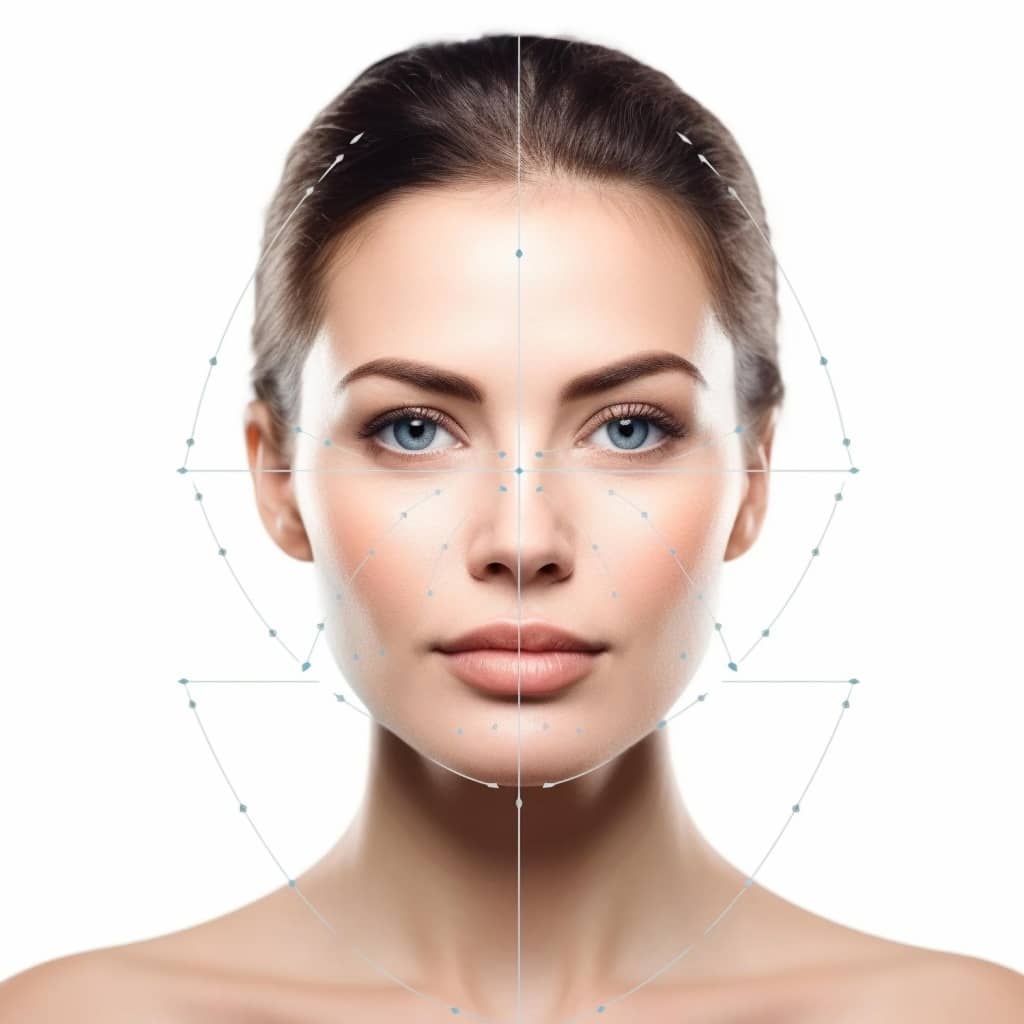
Beauty is a topic of fascination throughout millennia. Gustav Fechner, the pioneer of modern psychology proposed a set of metrics which could be used to statistically define the experience of beauty. Known as psychophysics, he examined the relationship between the material and the mental world, known as “die geistige Welt” in German, which translates literally to the spiritual universe.
In contemporary models involving the psychology of beauty, it is primarily regarded as an undefined aesthetic response. There have been diverse interpretations of beauty as an experience, including an element of cognition, hence the term “intelligent beauty” which one may make reference to.
Philosophers have hypothesized that beauty must possess an inherent element of surprise. In addition, it has also been ascribed to pleasure as a visceral sensation. Psychologists have debated that beauty itself innately must be universal, which may explain our preference for familiar objects. Interestingly, Immanuel Kant famously proposed that beauty, in contrast to sensuous pleasures, required thought. Is beauty an emotion after all?
Beauty – an Emotion Manipulated… Art, too, is a mixed bag these days. There’s a blend of ego and the desire for fame at any cost. Some rush to showcase their still-maturing creativity without a realistic self-assessment, while others concoct “impossibly new” ideas just to stand out and grab attention.
Back to Kant, who stated that pleasure must be distinguished from beauty. Studies performed by psychologists in modern times have backed up the theory that perception of beauty requires thought, as opposed to sensuous pleasures. To illustrate, we can best define it as an experience that results from a harmonious interplay between our mental and emotional / visceral faculties. This forms the premise of the experience of beauty which requires some extent of mental cognition and constitutes the basis of what we call intelligent beauty.
It seems that few people today care about the character of the art they create or consume. What’s the real value of self-expression in the grand scheme of things? The global network, as a hub of experience exchange, has greatly expanded all aspects of human life – sometimes for better, sometimes for worse. We’ve started calling things “beautiful” that have nothing to do with the concept. It’s crucial to distinguish between what’s truly beautiful and what’s just appealing, between uniqueness and silliness, genius and madness, goodness and evil.
“Stop confusing beauty with prettiness,” said Yohji Yamamoto, highlighting the problem of modern visual perception. Most of us understand this intuitively.
What defines the beauty of an object or phenomenon? Can it be determined by anything other than intuition, instinct, and taste? Is there an objective measure that separates beauty from prettiness?
Prettiness is about the exterior, while beauty goes deeper. Perceiving beauty is instinctive, rooted in subconscious memories passed down through generations. Every beautiful line, form, and combination is a solution refined by nature over millions of years of natural selection or discovered by humans in their quest for the sublime.
Unfortunately, things get muddled when money, fame, hypocrisy, sales, and consumerism enter the picture. It’s deliberately confusing, driven by someone’s vested interests. To distinguish true beauty from ugliness requires a long journey.

The observed impact of Instagram, for example, has been implicated in recent research that shows that users – particularly young, teenage females – were very vulnerable to messages conveyed via Instagram in terms of body image, as well as unrealistic physical aesthetic beauty expectations. The debate about the objective and subjective nature of beauty, its natural or social origins, continues. It’s unclear whether beauty originates from nature or human perception. Our life’s essence is to make the right choices, avoiding deception and illusions crafted by those with selfish interests. Learn to create music that touches hearts, paint pictures that elevate the spirit, reveal the truth, and beautify our world.
There is good and evil; beauty and ugliness; light and dark; enlightening and destructive; inspiring and degrading. Each of us must choose which side to stand on. This choice will influence the inspiration we receive and the creativity and art we give to the world.
Freedom from pride, greed, vanity, and selfishness allows a pure heart to soar with creative goodness, bringing prosperity, love, justice, beauty, and morality to the world.
We wish everyone in this world to open their hearts. Whatever we do, touch, or choose, always prioritize the goodness it brings to the world, supporting the order and beauty of the miracle of life given to us.
We wish everyone to become an Artist of Light.