
Beauty has always fascinated humanity. From ancient philosophers pondering its essence to modern scientists deciphering its code, the allure of beauty remains ever-present. But what exactly makes something — or someone — beautiful?
By studying how the brain responds to beauty, researchers hope to understand why we give some people an easier ride or appreciate certain artworks.
In the Neues Museum in Berlin, Queen Nefertiti’s head perches, almost weightlessly, on a swan-like neck. The painted stucco and limestone bust is 3,300 years old, but its plump red lips, high cheekbones and almond-shaped eyes look as if they come straight out of a fashion magazine.

Indeed, in the 103 years since German archaeologists unearthed the bust, it has achieved an iconic status that supermodels can only dream of. Although a vast chasm of history and culture separates the modern world from ancient Egypt, our continuing admiration of this portrayal lends credence to the idea that some beauty is timeless.
“The breadth of circumstances that seem to be affected by facial attractiveness is mind boggling. These observations have been difficult to explain,” says psychologist Benedict Jones of the University of Glasgow, UK.
But now, using technologies that range from digital face morphing to brain imaging, psychologists and neuroscientists are starting to identify the diverse qualities that humans find attractive in faces, as well as the complex networks in the brain that respond to beautiful features. Their work is not only uncovering neural links between evaluations of attractiveness and those of social attributes such as trustworthiness, but is also giving an insight into our appreciation of artworks such as the Nefertiti bust.
“This isn’t a trivial quirk of our facial structure,” says neuroscientist Peter Mende-Siedlecki at New York University. Beauty may be difficult to define, he says, but it is real and its influence is vast.”
The Science of Beauty
For most of human history, questions about beauty were tackled with logic and speculation. Thinkers and artists throughout history believed that facial beauty was intrinsically linked to certain ideal proportions — to Plato, for example, the width of a face should be two-thirds of its height. In fact, it is much more complicated than that. However, in recent decades, scientists have approached these questions using evolutionary psychology and neuroscience. We’re beginning to understand the “why” and the “how” of beauty, particularly regarding the human face and form. And guess what? We’ve stumbled upon some fascinating insights.
When it comes to seeing beauty in each other, while the decision is certainly subjective for the individual, it is sculpted by factors contributing to the group’s survival.
Starting in the 1990s, psychologists began to adapt special-effects techniques such as digital morphing to construct faces that people found more attractive.
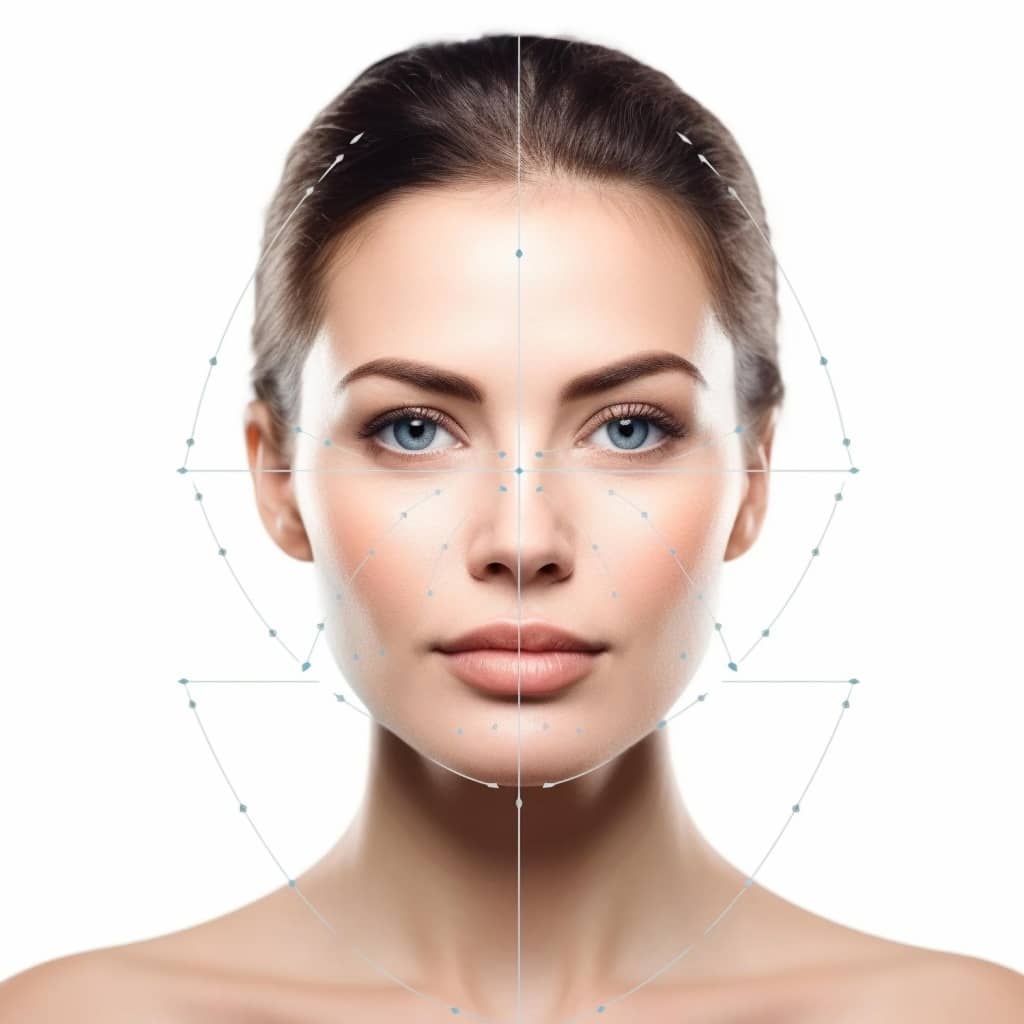
Many experiments have shown that a few basic parameters contribute to what makes a face attractive: symmetry, Golden Ratio, averaging, sexual dimorphism (femininity and masculinity) and the effects of hormones.
Why these traits?
Symmetry: Nature’s Perfection
The second factor that contributes to beauty is symmetry. People generally find symmetrical faces more attractive than asymmetrical ones. Developmental abnormalities are often associated with asymmetries, and in plants, animals, and humans, asymmetries often arise from parasitic infections.
“These are things that are thought to be quite important for mate choice and mate preference in many non-human animals,” Jones says.
A symmetrical face may indicate a healthy development, free of genetic disorders or infectious diseases. In the 1930s, Maksymilian Faktorowicz recognized the importance of symmetry for beauty when he designed the beauty micrometer. With this device, he could measure minor asymmetrical flaws, which he could then make up for with products he sold from his company, Max Factor — one of the world’s most famous brands for makeup.
The Golden Ratio: Divine Blueprint
The Golden Ratio is often cited as nature’s blueprint for beauty. It is also known as the divine proportion, is a special number (equal to about 1.618) that appears many times in various natural forms, from the spirals of seashells to the branching patterns of trees, in geometry, art, an architecture. It be observed as well in human anatomy. For instance, the proportion of the length of the forearm to the hand approximates the Golden Ratio. Studies have shown that faces with proportions close to this ratio are often perceived as more attractive. This phenomenon is believed to be rooted in evolutionary psychology, where symmetry and proportionality signal health and genetic fitness. Its prevalence in nature suggests an inherent aesthetic appeal that transcends human cultures and preferences.
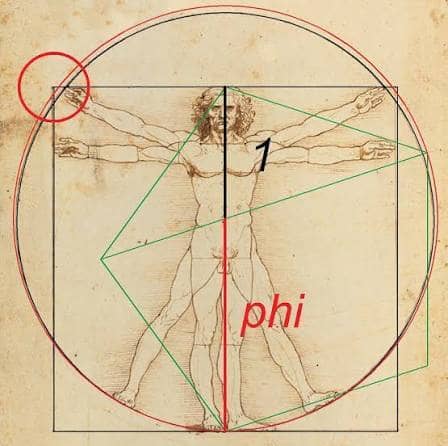
The Renaissance period witnessed a revival of classical ideals, with artists and architects drawing inspiration from ancient Greek and Roman principles. The concept of the “Golden Ratio,” a mathematical ratio approximately equal to 1.618, became particularly significant. This ratio, also known as the “Divine Proportion,” was believed to create aesthetically pleasing compositions and structures.
Leonardo da Vinci, one of the most renowned figures of the Renaissance, extensively studied and applied the Golden Ratio in his works. His famous drawing, the “Vitruvian Man,” illustrates the ideal human body proportions based on geometric principles. This drawing epitomizes the Renaissance belief that human beauty is intrinsically linked to mathematical harmony.
Averaging: The Composite Charm
The story behind averageness is less straightforward. Picture this: It’s 1878, and Sir Francis Galton is giving a remarkable talk at the Anthropologic Institute of Great Britain and Ireland. Known for his pioneering work in human intelligence, Galton is a brilliant polymath— a jack-of-all-trades in exploration, anthropology, sociology, psychology, and statistics. Oh, and let’s not forget, he’s also a eugenist.
During his talk, Galton presents a new technique to combine photographs and produce composite portraits, aiming to characterize different types of people. He hoped that this would help to identify the common physical characteristics of criminals, of those with a disease or of other ‘biological types’ such as a person’s ethnicity.
But surprise! The composite portrait he produces is beautiful. This unexpected result raises profound questions:
What is beauty? Why do certain configurations of lines, colors, and forms excite us so?
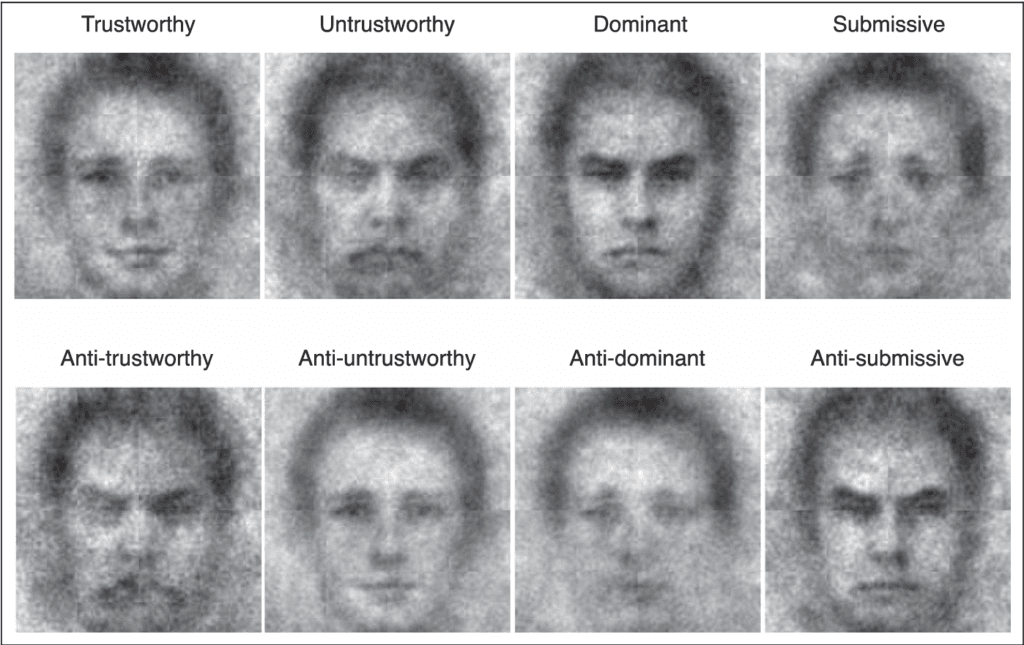
Galton’s finding that composite or average faces are typically more attractive than each individual face that contributes to the average has been replicated many times. This laboratory finding fits with many people’s intuitions.
Average faces represent the central tendencies of a group. People with mixed features represent different populations, presumably harboring greater genetic diversity and adaptability to the environment. This might explain why many people find mixed-race individuals attractive and inbred families less so.
Averageness, like symmetry, may be a signal of health — in particular, a lack of potentially harmful genetic irregularities.
“But this aspect of beauty might instead be a by-product of how the brain works. There are studies that show that averageness plays a role in the attractiveness of many other objects,” … like an average-looking watch face for example…. The brain works by extracting regularities.” says Marcos Nadal, a psychologist at the University of Vienna who studies aesthetic experiences.
Processing faces is an exceedingly complex task. The brain might just prefer faces that resemble the average face of a population because they are easier to identify than less typical faces.
Hormones: The Subtle Sculptors
The third factor that contributes to facial attractiveness is the effect of hormones. Estrogen and testosterone play important roles in shaping features that we find attractive. Estrogen produces features that signal fertility. Men typically find women attractive who have elements of both youth and maturity. A face that’s too baby-like might mean that the girl is not yet fertile, so men find women attractive who have large eyes, full lips, and narrow chins as indicators of youth, and high cheekbones as an indicator of maturity.
Testosterone produces features typically regarded as masculine, including heavier brows, thinner cheeks, and bigger, squared-off jaws. But here’s a fascinating twist: In many species, testosterone suppresses the immune system.
So the idea that testosterone-infused features are a fitness indicator doesn’t make much sense. Instead, scientists invoke a handicap principle. The most commonly cited example of a handicap is the peacock’s tail.
This beautiful but cumbersome tail doesn’t help the peacock avoid predators or approach peahens. Why should such an extravagant appendage evolve? Even Charles Darwin couldn’t explain it with his theory of natural selection, leading him to develop the theory of sexual selection.
On this account, the peacock’s tail is about sexual enticement, increasing the likelihood of mating and having offspring. The modern twist on this argument is that the peacock also advertises its health to the peahen. Only especially fit organisms can afford to divert resources to maintaining such an extravagant appendage. Similarly, only especially fit men can afford the price that testosterone levies on their immune system. By analogy, think of the fact that only very rich men can afford to pay more than $10,000 for a watch as a display of their financial fitness.
A feminine face — think of Nefertiti’s lips, cheekbones and eyes — could indicate fertility. And in fact, data suggest that feminine features are linked with higher estrogen levels and hence with fertility.
For masculine traits, however, psychologists speculate that a hyper-masculine face may be a ‘costly signal’ — a sign that a man has energy to spare. Many studies have shown that women prefer more masculine characteristics around the time of ovulation.
For now, these explanations for our preferences are conjectures. And as scientists gather further evidence, the picture of why we find others attractive grows more complicated. In one study, for example, researchers found that some non-industrialized societies do not consider highly feminine or masculine faces to be especially attractive. The authors speculate that a preference for sexual dimorphism could arise from processing lots of diverse faces in a densely populated environment. Skin quality, fat distribution and expression can also contribute to attractiveness, supporting the idea that beauty is linked to many markers of fitness, as well as a potential mate’s receptiveness.
The Beauty Bias
Science has also confirmed the adage, at least to a point. People broadly agree on what faces are attractive, both within and across cultures. Even babies prefer faces that adults judge to be attractive, suggesting that there is something hard-wired about these preferences. Our judgement of other people’s attractiveness often happens subconsciously and influences us in ways we do not realize.
While beauty has its perks, it also comes with a downside. Psychologists have observed that citizens vote for more attractive political candidates, judges give attractive defendants more lenient sentences and teachers grade better-looking students more favourably.
“Even making what may seem like a simple judgement — is this face attractive or not? — is dependent on a very complex system involving many different inputs,” Mende-Siedlecki says.
The Root of Attraction
This beauty-recognition system is part of the neural network that processes faces, which is shared between various brain regions. The occipital lobe, at the back of the brain, receives the signals from the eyes. Here, specialized areas extract basic information about the face being observed, such as features, expression, eye gaze and lip movement. These data are then bounced forward to the parts of the system that process higher-level information such as emotional state.
Studies consistently show that attractive faces light up the brain’s dopamine-driven reward network. For example, researchers have found people would press a key to see an attractive face for longer, in much the same way as a mouse will press a lever to get food or drugs, Jones says. Those faces stimulate areas such as the nucleus accumbency, which Nadal calls “a generator of pleasurable sensations”.
A key module of this system is the orbitofrontal cortex, which sits just above the eyeballs. Neuroscientists think that the middle part of this region is where the brain judges the value of a potential reward. In a study in which people could win money, this area showed more activity when the winnings were bigger.
“It’s focused on attractiveness with a positive bent: this is something of great social value,” says Mende-Siedlecki.
Researchers have also shown that a different part of the orbitofrontal cortex — an area that is associated with punishment — responds to unattractive faces. So just as seeing an attractive face may feel like winning money, seeing an unattractive face may feel a little like losing it.
Attractiveness activates these reward areas even if we are not consciously thinking about the beauty of a face. Outside of the reward network, this is also true for some core parts of the face-processing system in the visual cortex.
Neurologist Anjan Chatterjee of the University of Pennsylvania in Philadelphia and his colleagues showed participants 100 different images of faces, asking them to evaluate either the faces’ attractiveness or their identities. Using functional magnetic resonance imaging, the researchers found that brain areas specializing in face recognition showed more activity when participants looked at faces that they had previously rated as attractive than when they looked at less appealing faces.
“Such enhanced activity occurred even if participants were thinking only about the face’s identity and not about its attractiveness. This shows that the brain responds rapidly and automatically to beauty, Chatterjee says — even when beauty is not on our mind.”
The Fear Factor
Research on facial attractiveness is also leading neuroscientists to re-evaluate an almond-shaped emotion center deep in the brain, called the amygdala.
“For so long, we thought the amygdala is all about threat, all about snakes and spiders,” says Mende-Siedlecki.
Indeed, early studies focused on the role of the amygdala in processing fearful faces. But it is now clear that the amygdala reacts to all kinds of faces. A few studies have also indicated that, unlike other regions such as the orbitofrontal cortex, the amygdala may respond to attractiveness in a non-linear way — the reaction gets stronger the more beautiful or ugly a face is, and weaker for more neutral-looking visages.
“The signal is saying, there’s something here that’s kind of weird, kind of unexpected, not what I’m used to. The amygdala also contributes to judgements of trustworthiness” says Mende-Siedlecki.
Our brains have a “beauty is good” stereotype, leading us to associate attractiveness with positive traits like intelligence and trustworthiness. This overlap might be efficient for the brain, but as a side effect it could play a part in what psychologists call the attractiveness halo effect — a reflexive presumption that external beauty indicates overall goodness.
Sadly, this means that people with facial anomalies or disfigurements often face unfair biases. Media representations don’t help, frequently depicting villains with facial scars or asymmetries. Such a neural short cut can lead to all sorts of social benefits for attractive people, from better grades to more lenient punishments.
Professor Benedict Jones from Face Research Lab, and his team have found that people presented with hiring scenarios are more likely to award higher salaries to more attractive people. He contends that society should address this bias as much as it does for other prejudices.
“Hopefully, you will start to see things like people taking into consideration how you can minimize the effects of facial appearance on court decisions and hiring decisions,” he says.
To build a fairer society, we need to understand and counteract these implicit biases.
Neuroscience: The Aesthetic Brain
The study of facial attractiveness is also helping neuroscientists to start to understand a completely different aspect of society: aesthetics.
“In so far as we understand something about the neural response to beauty, we can begin to generate hypotheses about neural responses to other objects, including art objects,” says Chatterjee, who is also the author of The Aesthetic Brain (Oxford Univ. Press, 2013).
Take Nefertiti’s bust, for example. Academics agree that it probably does not resemble the real queen. Among other things, the sculptor Thutmose rendered it remarkably symmetrical.
Why would he do that?
“People have used the metaphor of artists as intuitive neuroscientists, in the sense that they have been able to engage the brain mechanisms that make people become interested or shocked or enamored,” says Nadal.
He speculates that Thutmose was not after realism or even physical attractiveness when he made his masterpiece. Instead, he was taking advantage of the halo effect, accessing the deep link that the brain makes between beauty and other virtues.
“Beauty would convey Nefertiti’s moral qualities, like goodness or justice or rectitude,” Nadal says.

Portraying Nefertiti as a beauty may have been used as a way to depict the queen’s moral qualities. Credit: Stephanie Pilick/DPA/Corbis
And as we know from historical accounts of her peaceful and prosperous reign, this queen was much more than just a pretty face.
Beauty And The Brain
So what happens in the brain when we see beautiful people? Attractive faces activate parts of our visual cortex in the back of the brain, an area called the fusiform gyrus, which is especially tuned to processing faces, and an adjacent area called the lateral occipital complex, which is especially attuned to processing objects.
In addition, attractive faces activate parts of our reward and pleasure centers in the front and deep in the brain, including areas with complicated names like the ventral striatum, the orbitofrontal cortex, and the ventromedial prefrontal cortex. Our visual brain, tuned to processing faces, interacts with our pleasure centers to underpin the experience of beauty.

Amazingly, while we all engage with beauty, beauty also engages us without our knowledge. Our brains respond to attractive faces even when we’re not thinking about beauty. Experiments have shown that attractive faces drive neural activity in our visual cortex even when we’re focused on other tasks, suggesting that our brain has built-in beauty detectors that ping every time we see beauty, regardless of what else we might be thinking.
Beauty As A Work In Progress
Beauty, it turns out, is a work in progress. The so-called universal attributes of beauty were selected for during the almost two million years of the Pleistocene. Life was nasty, brutish, and a very long time ago. The selection criteria for reproductive success from that time don’t apply today.
For example, death by parasite is no longer a top cause of mortality in the technologically developed world. From antibiotics to surgery, birth control to in vitro fertilization, the filters for reproductive success are being relaxed. Under these relaxed conditions, preference and trait combinations are free to drift and become more variable. Even as we profoundly affect our environment, modern medicine and technological innovation are profoundly affecting the essence of what it means to look beautiful. The universal nature of beauty is changing even as we’re changing the universe.
In conclusion, our brains are wired to find beauty in symmetry, golden ratio, average features, sexual dimorphism and hormonally influenced traits. But as we continue to shape our environment and ourselves, the very essence of beauty is also evolving.
So the next time you find yourself captivated by a beautiful face or form, remember — it’s not just about what you see. It’s a delightful dance between your brain, evolution, and the ever-changing world around you.
References
Langlois, J. H. & Roggman, L. A. Psychol. Sci. 1, 115–121 (1990).
Scott, I. M. et al. Proc. Natl Acad. Sci. USA 111, 14388–14393 (2014).
O’Doherty, J., Kringelbach, M. L., Rolls, E. T. Hornak, J. & Andrews, C. Nature Neurosci. 4, 95–102 (2001).10.1038/82959
Chatterjee, A., Thomas, A., Smith, S. E. & Aguirre, G. K. Neuropsychology 23, 135–143 (2009).
Fruhen, L. S., Watkins, C. D. & Jones, B. C. Leadership Quart. (2015).