
When we hear the word beauty, many of us immediately think about appearance: a beautiful face, a perfect body, stylish clothes, youthful skin, or an attractive image presented to the world.
From childhood, we are surrounded by countless messages telling us what beauty should look like. We see carefully edited photographs, advertisements promising transformation, and social media images that often present an idealized version of reality.
But what if beauty is not something we achieve by changing ourselves? What if beauty is something we discover by accepting, understanding, and expressing who we truly are?
A beautiful life is not created by having the perfect appearance, the perfect body, or the approval of others. A beautiful life is created when we feel connected to ourselves, when we use our talents, nurture meaningful relationships, take care of our bodies, and allow ourselves to experience joy, creativity, and love.
True beauty is not about rejecting appearance or ignoring self-care. Our physical appearance is an important part of self-expression. Taking care of ourselves, dressing in a way that reflects our personality, and feeling comfortable in our own body can bring confidence and happiness. However, appearance is only one layer of who we are. Beneath the surface exists something much deeper: our character, our values, our experiences, our emotions, our kindness, and the unique energy we bring into the world.
A person can have a beautiful face but lack warmth. Another person may not fit conventional beauty standards yet possess a presence that immediately attracts others because of their confidence, authenticity, intelligence, or compassion. Beauty is not only something we see. Beauty is something we feel.
The question is not simply, “How can I become more beautiful?”
A more meaningful question is: “How can I create a life that feels beautiful from within?”
The Illusion of Perfect Beauty
Every day we encounter another story about someone changing their body, restricting their food, exhausting themselves with exercise, or undergoing procedures because they believe they are not beautiful enough. But beauty created through constant self-rejection is not true beauty. When the desire to improve ourselves comes from the belief that “I am not enough,” no external change will ever feel complete. There will always be another flaw to correct, another standard to reach, another comparison to make. The endless pursuit of perfection can become a lifelong struggle.
Imagine waking up one morning and feeling genuinely grateful for yourself. Imagine feeling comfortable in your own body, appreciating your unique qualities, using your talents, and living a life that feels meaningful and fulfilling.
This possibility begins with acceptance. Self-acceptance does not mean giving up on growth. It does not mean ignoring health, personal development, or appearance. It means starting from a place of respect rather than criticism. There is a profound difference between:
“I need to change because I am not good enough.”
and:
“I care about myself, therefore I want to become the best version of myself.”
One comes from rejection. The other comes from love.
Unfortunately, many people spend enormous amounts of time and energy trying to achieve an external image of beauty while forgetting to develop the qualities that create lasting attractiveness: emotional intelligence, confidence, curiosity, creativity, kindness, and inner peace.
According to various industry reports, billions of dollars are spent every year on dieting, beauty products, cosmetic procedures, and appearance-related services. There is nothing wrong with enjoying fashion, skincare, makeup, or aesthetic improvements. These things can be wonderful forms of self-expression.
The problem begins when appearance becomes the foundation of self-worth. If someone spends all their energy trying to perfect the outside while neglecting their inner world, they may eventually discover that beauty alone cannot create happiness.
A beautiful appearance can attract attention.
A beautiful personality creates connection.
Body Standards Through the Ages: There Has Never Been One Definition of Beauty
One of the most important things to understand about beauty standards is that they are constantly changing.
What one generation considers beautiful may look completely different to another. Beauty ideals are influenced by culture, history, economics, social values, art, and even survival needs.
Throughout human history, people have searched for harmony, balance, and meaning in the human form.
Ancient philosophers explored beauty not only as a physical quality but also as a reflection of deeper principles.
Plato distinguished between different forms of beauty: spiritual, physical, and material beauty. For him, the highest form of beauty was connected with knowledge, morality, and truth.
Later, the philosopher Georg Wilhelm Friedrich Hegel connected beauty with human consciousness. He believed beauty was the external expression of an idea—the unity between inner meaning and outer form. Immanuel Kant viewed beauty as something that inspires admiration beyond practical usefulness. Beauty was not simply about function but about the emotional and intellectual response it creates. Different historical periods created different ideals of physical beauty.
In Ancient Greece and Rome, beauty was strongly connected with harmony, proportion, and balance. The human body was seen as a representation of order and perfection.
During the Middle Ages, beauty ideals shifted toward modesty, spirituality, and delicacy. Pale skin and slender figures were often associated with refinement.
During the Renaissance, artists returned to the idea of proportion and harmony. The human body became one of the greatest subjects of artistic exploration. Beauty was seen as a reflection of balance between nature and human creativity.
The Baroque era introduced a different ideal. Fuller, softer bodies became associated with abundance, femininity, and fertility. This can be seen in the works of artists such as Peter Paul Rubens, whose paintings celebrated sensuality and fullness.
By the middle of the 20th century, beauty ideals changed again. The ideal beauty was a robust, sturdy body reminiscent of a hardworking farm girl. A stronger, healthier-looking body became associated with vitality and activity.
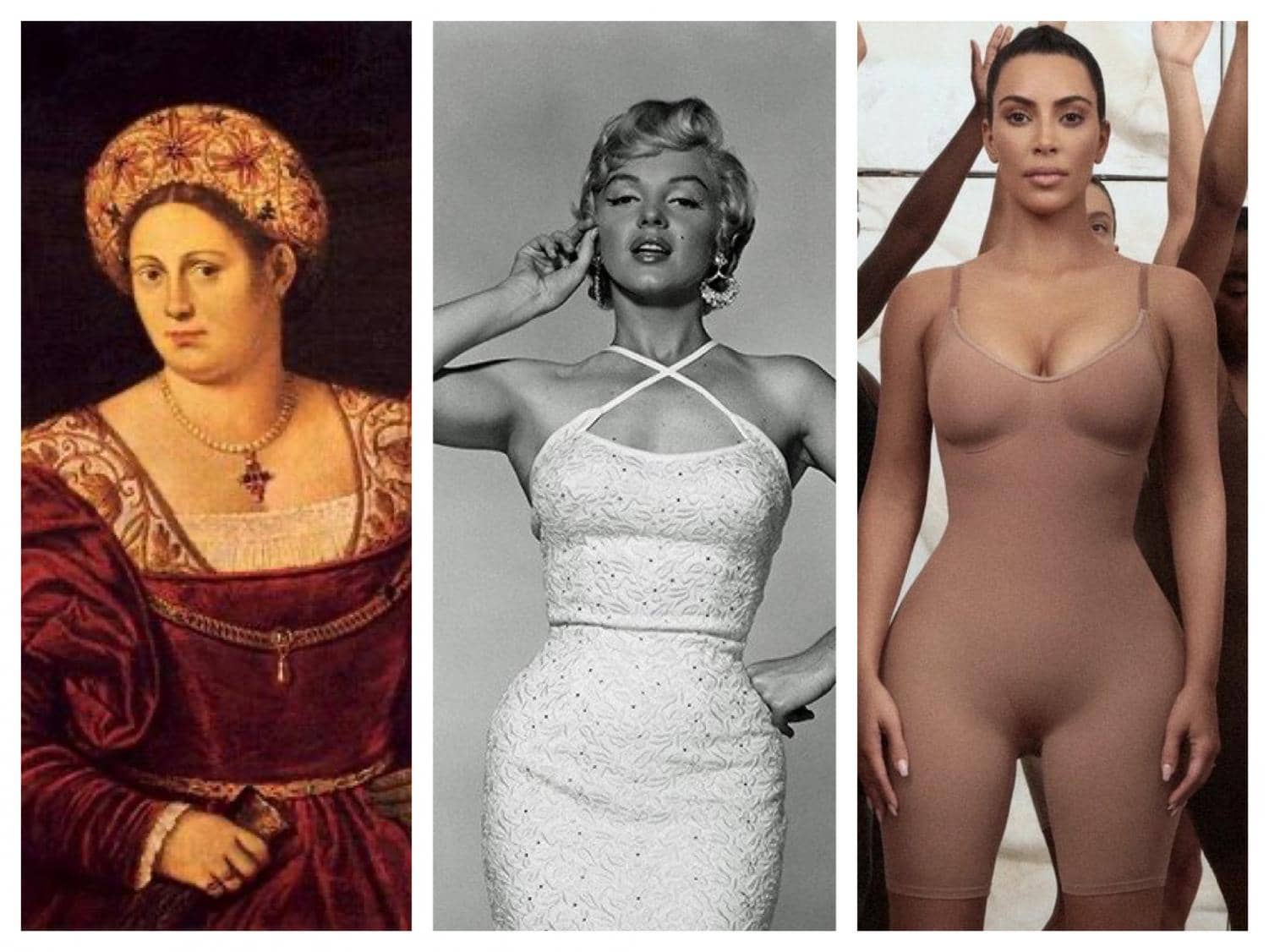
Later, fashion and media increasingly promoted extremely thin, tall figures as the dominant beauty ideal. Today, “high fashion” dictates beauty standards as extremely thin, very tall figures with narrow hips and long legs. History changes, and fashion tends to recycle itself. Yesterday’s styles inspire today’s photographers, designers, and filmmakers. As they say, “Everything old is new again.”
However, history repeatedly proves one important truth: Beauty standards are temporary. Human uniqueness is timeless. Fashion changes. Trends disappear. The human need to express individuality remains.
The Problem With Measuring Our Worth Through Appearance
Modern society often sends a subtle but powerful message: your value depends on how you look. We are encouraged to believe that youth, attractiveness, status, money, popularity, and physical perfection determine our worth. But external achievements can never fully answer the deeper human questions:
“Am I loved?”
“Am I valuable?”
“Do I matter?”
If self-worth depends entirely on external validation, it becomes fragile because external things constantly change.
Youth changes. Fashion changes. Bodies change. Social expectations change. But our deeper qualities can continue developing throughout our entire lives. You true beauty is revealed through the way you think, communicate, love, create, and contribute.
Think about the people who inspire you most. Often, it is not their perfect appearance that stays in your memory. It is their presence. It is the way they make others feel. It is their passion, courage, humor, generosity, intelligence, or authenticity. Some people become more beautiful with age because their personality, wisdom, and confidence become more visible. A face that has experienced life can carry a depth that youth alone cannot create.
Beyond the Mirror: Beauty as a Relationship With Yourself
True beauty begins with the relationship we have with ourselves. Many people look in the mirror searching for imperfections. They focus on what they want to change rather than appreciating what already exists. But the mirror does not only reflect our physical appearance. It reflects our relationship with ourselves. A person who accepts themselves often appears more attractive because acceptance creates relaxation, confidence, and natural expression.

Confidence is not arrogance. Confidence is the quiet feeling: “I know who I am, and I am comfortable being myself.” This is why two people with similar physical features can create completely different impressions. One may appear insecure and disconnected, while another appears radiant because they are comfortable in their own presence.
Beauty is not only about features. Beauty is about energy. It is about the way someone enters a room, communicates, smiles, listens, and interacts with others.
What about aging?
One of the greatest misconceptions of modern beauty culture is the belief that beauty has an expiration date. We are constantly surrounded by messages suggesting that youth equals attractiveness, while aging means losing value. Wrinkles are treated as flaws, gray hair as something to hide, and maturity as something to fight against. But true beauty does not disappear with age—it transforms. Aging is not the opposite of beauty. It is a natural continuation of becoming yourself.
Personal Style is an Expression of Inner Beauty.
Beauty is often associated with physical appearance, but personal style reveals something much deeper. Style is the language through which we communicate with the world without saying a word. It reflects our personality, our values, our lifestyle, our experiences, and the way we see ourselves.
Inner Beauty and Outer Beauty: Finding Harmony
The idea that beauty comes from within does not mean that the external world does not matter. Humans have always been naturally drawn to beauty, harmony, creativity, and self-expression. The way we dress, care for ourselves, and present ourselves can be a meaningful reflection of who we are. Our appearance is a language. Through clothing, hairstyle, colors, movement, and personal style, we communicate something about ourselves before we even say a word.
When external appearance matches inner identity, something special happens: a person feels authentic. They no longer feel as if they are performing a role or trying to become someone else. Instead, their appearance becomes an extension of who they already are. This is the difference between simply looking attractive and truly appearing alive. You may wear fashionable clothing, use expensive cosmetics, or follow every beauty trend, but if the appearance feels disconnected from your personality, something is missing.
On the other hand, someone wearing simple clothing can appear incredibly attractive when their appearance reflects confidence, comfort, and authenticity.
It is not about inner beauty vs outer beauty. Rather than being mutually exclusive opposites, they are deeply intertwined dimensions of an individual that complement and magnify each other. The goal is not to reject appearance but to bring the outer and inner worlds into harmony. Harmony is the foundation of beauty.
Harmony between:
the way we look and the way we feel;
our appearance and our personality;
our body and our lifestyle;
our external expression and our inner values.
When these elements support each other, beauty becomes natural rather than forced.
Beauty Is More Than a Body
The human body is an incredible creation, but it is only one part of who we are. Unfortunately, many people have learned to view their bodies as projects that constantly need fixing. They evaluate themselves according to numbers on a scale, clothing sizes, wrinkles, or comparisons with others. But the body is not an enemy to overcome. It is the physical home through which we experience life. A healthy relationship with the body begins with appreciation. Our body allows us to:
experience movement and pleasure;
embrace people we love;
create and work;
travel and explore;
express emotions;
experience the world through our senses.
Caring for the body is an act of respect, not punishment. Eating nourishing food, exercising, sleeping well, and maintaining health are not ways to become “worthy” of love. They are ways of showing love to ourselves because we already have value.
The most beautiful people are often not those who have achieved some impossible physical ideal. They are those who are connected to themselves. They move with confidence. They smile naturally. They are comfortable in their own presence. They have a relationship with their body based on gratitude rather than criticism.
A Beautiful Life Is Created, Not Achieved
A beautiful life is not something that suddenly appears when we reach a certain weight, age, income, or social status. It is created through daily choices. A beautiful life may include:
A morning walk when the world is quiet.
A conversation with someone who truly understands you.
A home filled with warmth.
A creative project that excites you.
A meal prepared with care.
A moment of gratitude.
A decision to forgive.
A willingness to learn something new.
Beauty is found in attention.
When we slow down enough to notice life, ordinary moments become meaningful. A beautiful person is not someone who has a perfect life. A beautiful person is someone who knows how to find meaning, growth, and connection within an imperfect life. Challenges, failures, and difficult experiences do not destroy beauty. Sometimes they create it. A person who has overcome difficulties often develops compassion. A person who has experienced loss may understand love more deeply. A person who has struggled may discover inner strength. Life itself shapes beauty.
Take Your Life Back From Unrealistic Standards
The modern world constantly invites us to compare ourselves. Social media, advertising, and entertainment industries often present carefully constructed images of perfection. These images may inspire us, but they can also create unrealistic expectations. It is important to remember that most public images are curated. Lighting, professional styling, editing, filters, and careful selection all influence what we see.
Comparing our everyday reality with someone else’s carefully created presentation is unfair to ourselves.
Instead of asking:
“Why don’t I look like them?”
we can ask:
“What makes me uniquely beautiful?”
Maybe it is your sense of humor. Maybe it is your creativity. Maybe it is your ability to support others.
Maybe it is your curiosity, kindness, resilience, or passion. Every person carries something that cannot be copied. The world does not need more identical versions of beauty. It needs more authentic people.
The Most Important Beauty Practice: Loving Yourself

Self-love is not a single decision made once. It is an ongoing relationship with yourself. Some days it is easy to appreciate yourself. Other days it requires patience and compassion. Self-love means speaking to yourself with kindness. It means caring for your body. It means respecting your emotions. It means allowing yourself to grow without constantly criticizing who you are today.
The Vietnamese Buddhist monk and teacher Thich Nhat Hanh expressed this beautifully:
“To be beautiful means to be yourself. You don’t need to be accepted by others. You need to accept yourself.”
Acceptance is the foundation of confidence. When we stop fighting ourselves, we free energy for creativity, relationships, and personal growth.
Beauty Is the Art of Being Fully Alive
So, can you imagine a beautiful life?
Not a perfect life. Not a life designed to impress others. A beautiful life. A life where you feel connected to yourself. A life where your appearance reflects your personality rather than hides it.
A life where you care for your body, expand your mind, nurture relationships, and follow your own path.
True beauty is not found in chasing an impossible ideal. It is found in becoming more fully yourself.
Your body will change. Fashion will change. Beauty standards will change. But your essence—the qualities that make you uniquely you—can continue to grow throughout your entire life.
The most attractive people are not those who have never faced imperfections. They are those who have learned to embrace themselves completely. Beauty is not something you need to earn. It is something you reveal when you allow yourself to live authentically.
Take care of yourself.
Explore your talents.
Create meaningful connections.
Laugh more.
Learn more.
Love more.
Because the most beautiful life is not the one that looks perfect from the outside.
It is the one that feels beautiful from within.