
Beauty, in all its glory, is an aesthetic marvel that denotes perfection, a harmonious blend of elements that brings aesthetic pleasure to the beholder. While “beauty” itself is a lovely concept, its grander cousin, “the beautiful,” takes things up a notch, representing the highest degree of aesthetic delight.
In everyday life, the perception of beauty isn’t just an ideal to ponder; it’s an emotional and aesthetic continuation of the world we experience through our senses. Whether it’s art, nature, or the creations of the human spirit, we judge beauty based on its harmony and appeal.
Most everyone agrees that certain women — Greta Garbo, Grace Kelly, Ingrid Bergman — are truly beautiful. But what actually constitutes beauty in any given era is very complex.
“Faces go in and out of fashion,” says Diana Vreeland, special consultant to the Costume Institute of the Metropolitan Museum of Art in New York.
Beauty, they say, is in the eye of the beholder. Yet, throughout history, the beholders have been many, and their perceptions of beauty have evolved dramatically. From the robust figures of prehistoric fertility goddesses to the chiseled features of today’s Instagram influencers, beauty standards for both women and men have shifted with time and culture.
Let’s take a delightful journey through the ages and explore how the concept of beauty has been perceived in different historical epochs.
Prehistoric Era: Survival and Fertility
In the prehistoric era, the perception of beauty was closely linked to survival and fertility. Early humans lived in harsh environments where survival depended on physical strength and the ability to reproduce. As such, physical attributes that signified health, fertility, and strength were considered beautiful.

Artifacts such as the Venus figurines, dating back to 28,000 to 25,000 BCE, reflect these ideals. These small statues, often depicting women with exaggerated breasts, hips, and thighs, emphasize fertility and the capacity to bear children. The focus on robust, well-nourished bodies suggests that in times of scarcity, physical attributes associated with health and fertility were paramount.
Men, on the other hand, were admired for their strength and muscularity, which were essential for hunting and protection. A strong, robust body meant survival, not just for the individual but for the entire community. Beauty, in this era, was less about looks and more about functionality.
Ancient Civilizations: Divine Proportions and Status
As human societies became more structured, the perception of beauty began to reflect social hierarchies and religious beliefs. In ancient Egypt, for example, beauty was associated with order, symmetry, and proportion. The Egyptians believed that physical beauty was linked to spiritual well-being, leading them to develop cosmetics and elaborate grooming rituals. Queen Nefertiti, whose bust remains a symbol of beauty, exemplified the Egyptian ideal of symmetry and grace.
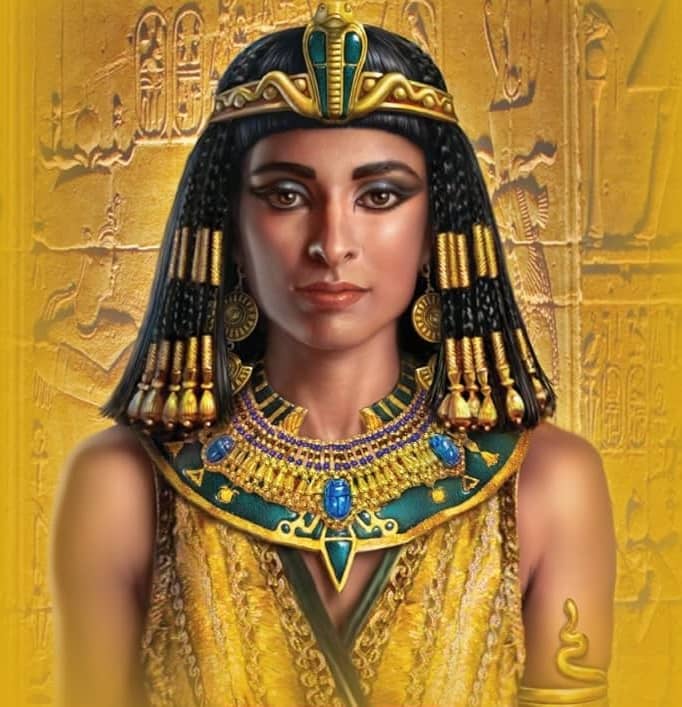
Cleopatra’s legendary beauty was enhanced by her mastery of cosmetics and her regal demeanor. Both men and women used makeup, not just to beautify but to connect with the divine. Kohl-lined eyes and painted lips were common, with beauty rituals taking on a sacred quality.
The Greek Marvels
Starting with the ancient Greeks, beauty was seen as an intrinsic part of the cosmos. In ancient Greece, beauty was almost a science. The Greeks were obsessed with proportions, leading to the creation of the “Golden Ratio,” which they believed embodied physical perfection. Men like the sculpted gods in marble statues had muscular, well-defined bodies, while women were expected to have harmonious, balanced features.

For Aristotle, beauty was all about magnitude and order. Harmony, symmetry, proportionality, and balance were the buzzwords of beauty. Statues like the Venus de Milo and Discobolus illustrate the Greek ideal of beauty, which combined physical perfection with intellectual and moral virtue.
“But the Greeks knew that there was more to a person than just a face,” says Dr. Dietrich von Bothmer, chairman of the Greek and Roman department at the Metropolitan Museum of Art in New York. “Beauty was considered an excellence, like honesty or bravery. Physical beauty was important, but it had to be coupled with goodness of spirit as well.”
The Greek ideal emphasized a blend of physical beauty and intellectual virtue, creating a holistic approach to attractiveness. So, being beautiful also meant being kind and morally upright — how charming!
In a very old ode Plato tells us the three wishes of every Greek: to see BEAUTY, be healthy, to be beautiful, and to become rich by honest means. Greek parents-to-be were so concerned about their offspring’s beauty that they placed statues of Aphrodite or Apollo, the two deities of physical appearance, in their bedrooms to help them conceive beautiful children.
“The secret to beauty, by Greek standards, was in the harmonious proportions of facial features,” says American University art historian and painter Carol Ravenal “There was both a rational as well as mystical appeal. Mathematics was the key to form.”
The Greeks had devised a science of physiognomy, according to John Scarborough, professor of classics and history of medicine at the University of Wisconsin. The science was so highly developed that the Greeks ‘ “even read a person’s character from physical features.”

Plato saw the structure of the human body and face as a system of triads. For Greek mathematicians, the number 3 had special significance. The perfect face was divided into three sections: from hairline to eyes, from eyes to upper lip, and from upper lip to chin. The ideal face was two thirds as wide as it was high.
Centuries later observers also looked for the elusive mathematical formula to define beauty. In the 18th century, art teacher Antoine Mengs scrutinized Greek statues and devised a complicated formula to duplicate a face beautiful by Greek standards. He determined the size of the eyes, the space between them, where the hairline should start on the brow, and the precise distance from the tip of the nose to the lips.
But when Johann Winckelmann, one of the first historians to examine ideals of beauty, looked for “perfect” beauty in Greek art, he concluded that it was difficult to find — if, indeed, it existed at all. “If,” he said, “it was absolutely clear what true beauty is, then men wouldn’t differ so much in their opinions.”
Certain characteristics, according to Winckelmann, were recognized by the Greeks as beautiful: a straight nose or one that fell in a slightly depressed line from its root to the forehead; a low forehead for the look of youth; and perfect eyebrows, called “eyebrows of grace,” that formed a delicate arch just over the brow bone.
Particularly appealing were eyebrows that grew together over the nose — “a feature,” says art historian von Bothmer, “which we certainly wouldn’t think much of today.”
The mouth admired by the Greeks was similar to the current fashion: naturally reddish, the lower lip slightly fuller than the upper. The perfect Greek chin, round and smooth, was unmarked by any dimple. These weren’t considered appealing for centuries to come.
The most important criterion for beauty was the hair. Blond hair, the color of flax, was considered the loveliest, so it is not by coincidence that many Greek gods are portrayed as blond. Women’s hair was worn simply, combed and parted above the brow, gathered at the back of the head and twisted with ribbons into a high-top knot.
To achieve the desired look, Greek women used makeup, including powder, rouge made from a root imported from Syria, black and red pencils and perfume, all applied before a shiny metal disc that reflected their faces. And, to hide unwanted signs of aging, Greek women camouflaged their wrinkles with white lead and tinted their hair to cover gray.
The use of makeup, though, was limited to the hetaera, or courtesans, because beauty wasn’t considered important for the Greek housewife. As the orator Demosthenes put it, a man married “to have a faithful watchdog in the house. Beauty and gratification of the senses came from the mistress.”
The Romans took up where the Greeks left off. In the first century, the Roman poet Ovid wrote the first manual of beauty advice. The science of makeup was well known in the ancient world.

According to historian Scarborough, women of the upper classes followed Ovid’s recommendations and prepared their cosmetics according to his formulas. Women tinted their hair if it became gray, smeared wrinkled skin with wax to make it look smoother, and replaced missing eyebrows with ones made of fur.
The Middle Ages: Spirituality and Modesty
The Middle Ages saw a shift in the perception of beauty, heavily influenced by Christian theology. During this period, beauty was seen as a reflection of spiritual purity and piety. The emphasis was on modesty, and physical beauty was often considered a potential source of sin.

Art from the Middle Ages, such as illuminated manuscripts and religious iconography, focused on spiritual themes rather than physical perfection. Women were often depicted in modest clothing, with subdued features that conveyed humility and devotion. The ideal of beauty was less about physical attributes and more about a reflection of inner virtue and divine grace.
The Renaissance: Revival of Classical Ideals
The Renaissance brought a revival of classical ideals and a celebration of the human form. This period, spanning the 14th to the 17th century, saw a flourishing of art, literature, and philosophy that celebrated human potential and beauty. Women with fuller, more voluptuous figures were considered beautiful, reflecting the abundance and prosperity of the era. Think of Botticelli’s “The Birth of Venus,” where the goddess is depicted with soft curves and flowing hair, embodying the Renaissance ideal.
The Renaissance man was not just physically attractive but intellectually and artistically gifted. The perfect man was well-rounded, excelling in various fields. Michelangelo’s David, with his perfectly sculpted body, became the standard of male beauty, representing both physical perfection and intellectual prowess.

Artists like Leonardo da Vinci and Michelangelo sought to capture the complexity and beauty of the human body through detailed studies and masterpieces. The Mona Lisa and David are prime examples of Renaissance art that reflect a deep appreciation for human anatomy and the natural world. The Renaissance ideal of beauty was characterized by proportion, symmetry, and a harmonious blend of physical and intellectual qualities.
Beautiful women of the Middle Ages — from the 13th to 15th century — were found in the legends of King Arthur and the poems of Chaucer. The standards of beauty were very specific. Hair should be blond and fine like gold wire, and if nature didn’t provide the proper color, it could be produced by dyes imported from the East.
“And,” says Christian Zacher, professor of medieval literature at Ohio State University, “gray eyes were prized above everything else.”
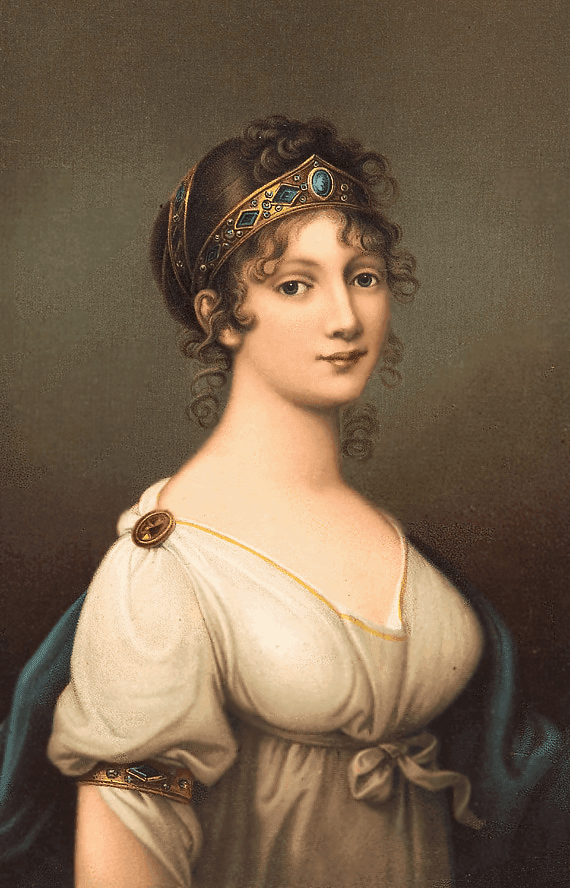
The concept of feminine beauty entered a new era with the 15th-century Italian Renaissance. Botticelli, Leonardo and Raphael painted a procession of marvelously varied faces yet all are united by a certain serious beauty.
“Boticelli’s Madonna are lovely,” says art historian Ravenal, “because they appear delicate and destructible.”
Leonardo’s paintings of the Virgin show a woman who is beautiful not because her features are perfect in the Greek sense but because her face conveys a sense of mystery combined with maternal tenderness.
Raphael’s standard of beauty shaped the work of artists for centuries.
“His image of beauty is exquisite,” says Ravenal. “It’s not threatening. While less monumental than the Greeks, it’s still harmonic. Raphael understood the feminine psyche.”
The Baroque and Rococo Periods: Ornate Extravagance
The Baroque and Rococo periods took beauty to new heights of extravagance. Women adorned themselves with elaborate hairstyles, intricate dresses, and plenty of accessories. Pale skin remained a standard, often enhanced with powdered wigs and heavy makeup. Beauty was about displaying wealth and status, and the more elaborate the look, the better.

Men, too, embraced this ornate style. The ideal man was well-groomed, with powdered wigs and tailored clothing that showcased his status. The concept of masculinity was intertwined with elegance and refinement, a far cry from the rugged ideals of earlier periods.
In the Rococo period, beauty became more playful and decorative. Portraits of aristocratic women, like those by François Boucher, often depicted them with elaborate hairstyles, delicate features, and lavish clothing. This period’s beauty standards were closely tied to the aristocracy, where opulence and leisure were seen as markers of beauty and status.
Rubens: Big is Beautiful
The women painted by Peter Paul Rubens in the 16th century would hardly be thought of as today’s ideal. They were pale but with rosy flesh tones, and their cheeks and chins were resplendently plump. So were his bodies, with rounded thighs and swelling busts. Rubens infused his subjects with the warmth he experienced in his personal life. His long first marriage was happy, ending only with his wife’s death. Four years later, at the age of 53, he married 16-year-old Helene Fourment, whose face appeared many times in the paintings made during the rest of his life.

Class, in economic and political terms, became a factor in beauty. According to Jean Liebault, a 16th-century Parisian doctor – the faces of ideal women should be pale, because unattractively tanned skin was associated with country women who had to work outdoors. Cheeks should be soft and pink and dimpled like children’s, and best of all was the asset of having a double chin. Red hair was out, eyes should be big, ears small, and teeth present. But not everyone agreed. Liebault’s wife had her own point of view on her husband’s notion’s of beauty, which she expressed in a book called “The Miseries of the Married Women.”
The 19th Century: Romanticism and Realism
By the late 18th century, cries revolution was in the political winds of Europe and America. Individualism and personal liberty were the rallying cries of the day. In art, “faces became important,” says Ellen G. Miles, curator of painting and sculpture at the National Portrait Gallery. “Features used to be less important. Now there was a real interest in the subject rather than the painting’s historical or allegorical context.”

The 19th century saw the rise of Romanticism, which celebrated natural beauty and emotion. Women’s beauty standards shifted towards a more ethereal look, with flowing hair and soft, delicate features. The ideal woman was seen as gentle and nurturing, with a beauty that reflected her inner sensitivity.
Men’s beauty during this time was also influenced by Romantic ideals. The rugged, brooding look became popular, with men like Lord Byron embodying the “Byronic hero” – a handsome, mysterious figure with a tortured soul. This era also saw the rise of the dandy, a man who paid meticulous attention to his appearance, blending fashion with a sense of individuality.
Romantic artists and poets like William Blake and Caspar David Friedrich portrayed beauty as something wild, untamed, and deeply emotional.

In contrast, Realism, which gained prominence in the mid-19th century, sought to depict everyday life and ordinary people with honesty and accuracy. Realist artists like Gustave Courbet and Édouard Manet challenged traditional notions of beauty by portraying the working class and mundane scenes, emphasizing authenticity over idealization.
Victorians and the Double Standard
One London author, Alexander Walker, considered definitions of beauty in his 1836 book “Beauty: An Analysis and Classification.” He identified the need for asymmetry, saying that it is “the first character of beauty in thinking beings. An occasional irregularity makes us better appreciate symmetry.”

“Victorian women had to live with the double message, to hold your man by being “seductive and innocent at the same time,” says Valerie Steele, author of “Fashion and Eroticism: Ideals of Feminine Beauty from the Victorian Era to the Jazz Age” (Oxford University Press, 1985).
In a sense, the Victorians inherited all of the earlier western beliefs bout feminine beauty from the Greek myth of Aphrodite, which associates beauty with love or sexual desire, and from the negative myth of Pandora, in which beauty is equated with evil. On one hand, Victorians were anxious to enhance their beauty with cosmetics but were hesitant to do so because makeup was associated with prostitutes. In addition, they were aware by this time of the dangers lead and arsenic contained in some preparations.
The Victorian era was all about having the perfect appearance. Women were to be petite, fragile, and, most importantly, pure. Anything that could be considered sensual or sexual was considered taboo. For example, women were encouraged to hold their fainting spells to avoid ruining their delicate figures.
Pale skin was the norm and considered beautiful, while sun exposure could lead to permanent damage and ruddiness. Furthermore, women were expected to avoid excessive physical activity to prevent bloating. Curves and an “hourglass figure,” resembling a wasp waist, was considered the epitome of beauty.

For Victorian women, corsets became necessary for achieving the ideal figure. Corsets created a tiny waist and large hips by severely constricting breathing and organs to achieve maximum growth. Moreover, women had to regularly apply whitening lotions to remove freckles or any other sign of imperfection. Otherwise, their suitors would insult them.
The 20th Century: Modernism and Media Influence
The 20th century brought about a revolution in beauty standards, driven by technological advancements and the rise of mass media.
The Modernist movement, which began in the early 20th century, rejected traditional aesthetics in favor of innovation and experimentation. Artists like Pablo Picasso and Salvador Dalí explored abstract and surreal forms, challenging conventional beauty standards.
In pre-World War I times, full faces and voluptuous bodies were favored traits that were associated with good health and beauty. Actress Lillian Russell fit the bill perfectly. A star of the musical comedy stage in New York, Russell had blond hair, luminous white skin and soft dimpled cheeks, not unlike a doll’s face. She was described as “a golden-haired goddess with big rounded cheeks.” For several generations of American women, Russell was the epitome of feminine beauty. If a woman made a slighting remark about another, the retort would be, “You’re no Lillian Russell yourself.”

World War I was, in many respects, the dividing line between the Victorian age and the modern era. Tastes in clothing fashion changed as did tastes in women’s faces. The corset was put in the attic and the modern woman openly made up and had her hair bobbed. It was an era when the women won the right to vote and were even criticized for leaving their faces in a “raw state” without benefit of cosmetics.
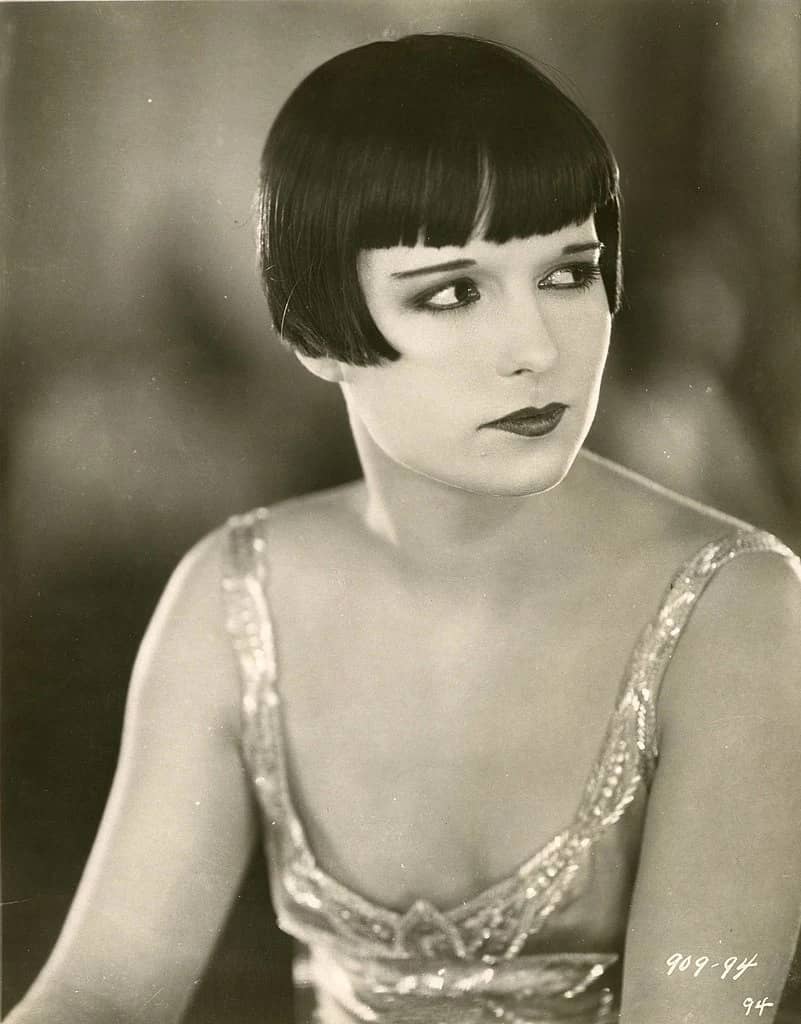
The early 1900s saw women embracing a more liberated look, with shorter hair and more practical clothing. Women began cutting their hair short, which was shocking and offensive to both men and women of older generations. Keep in mind, despite the fact that women had just won the right to vote, many people still felt that women were the inferior sex and that they could never be seen as equals to men. Because of this, there was an underlying societal pressure for women to prove that they were just as capable and intelligent as men, often by downplaying the qualities that made them conventionally feminine, and this heavily influenced the beauty standards of the time.

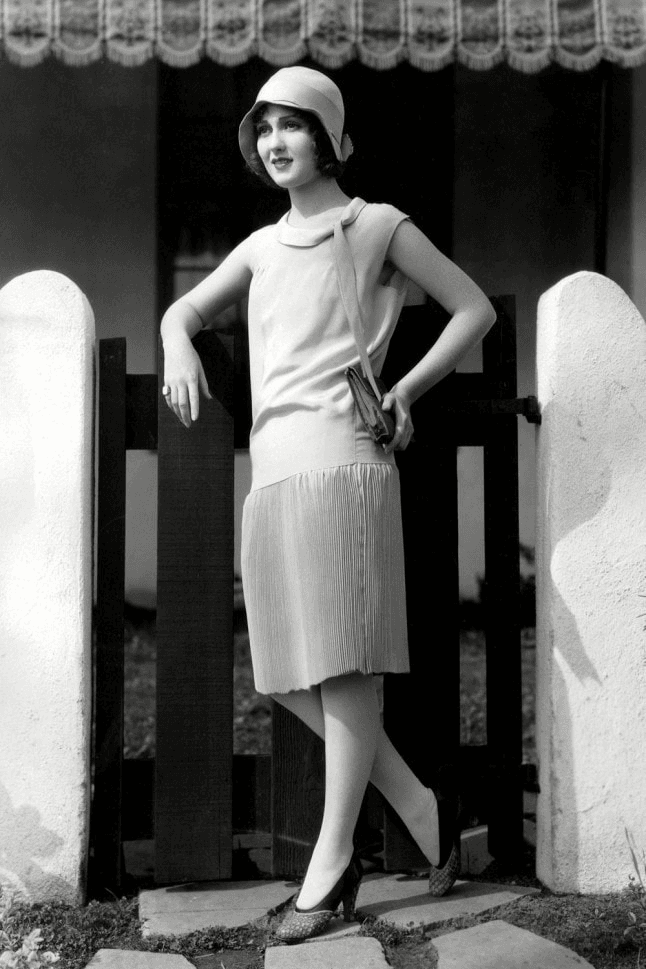
During the 1920s the charming childish “flapper” look — characterized by a small, pursed mouth, round face, and obligatory short waved hairdo — was replaced in the public’s imagination by the face of Greta Garbo.
“She changed everyone’s way of thinking about what was attractive.” says Kobal. “No longer was beauty amorphous.”
Strength now became an ingredient in the formula for a beautiful face.
By the 1950s, the world had changed in very dramatic ways. The Great Depression and World War Two had taken a toll on the economy, forcing women in the 1940s to make due with what they had. Because of rationing, women would use eyebrow pencils to draw “seams” up the backs of their legs to make it look like they were wearing nylons, and they began making alterations on men’s suits to repurpose them into dresses (which led to the very popular trend of wearing padded shoulders). But by the 50s, the economy was booming for the first time in decades.
The beauty industry took off like never before, providing fashionable dresses and cosmetics at affordable prices to women of every class. The availability of these products, amongst other factors, created a societal expectation for women to “keep up appearances”, and always look their best. Full lips with bright red lipstick were the new trend, as well as voluminous hairstyles.
As women began gaining a little more weight (due to the fact that food was no longer being rationed, as it had been in the previous decade), the hourglass figure became the most desirable shape, which brought about the repopularization of corsets. Contrary to popular belief, “plus-sized” women were not the ideal of the time, at least, not what we could consider today to be “plus-sized”. Women still wanted thin arms and legs, as well as a tiny waist, but they also wanted large breasts and round hips. By today’s standards, the ideal women in the 1950s were still quite thin.

From the 1950s, the face that became an icon of American beauty was that of Marilyn Monroe. Surrounding her soft, open, vulnerable face was a frame of peroxided hair. A color traditionally associated with angels and virtuous women, it heightened her raw sensuality and legitimized it as well. Women of all ages chose to bleach their hair, too, and obtain exact copies of her bright red lipstick made by companies such as Max Factor, creator of “makeup for the stars.” According to Kobel, the cosmetics she used “were applied so cleverly to take away what wasn’t quite right with her face.”
“In her lifetime,” said Steinem, who has recently published a new book on Monroe, “Marilyn” (Henry Holt, 1986), “she was not equally appealing to men and women. With its promise of sexual reward, admiring her face and body was a masculine phenomenon. But now, after her death, the challenge is gone and women can feel more empathetic towards her.”
Hollywood played a massive role in shaping beauty standards for both men and women. Stars like Marilyn Monroe, Audrey Hepburn and James Dean became icons of beauty, influencing fashion and popular culture. Women’s beauty standards fluctuated between the voluptuous figures of the 1950s and the waif-like silhouettes of the 1960s, exemplified by models like Twiggy.

The 60s were a time of breaking boundaries and allowing women to take control of their lives. The idea “if you’ve got it, flaunt it” became popular among women. It became more common for women to wear pants, shorter skirts, and even see-through blouses.

Strawberry blonde hair was famous in the 1960s, particularly among Hollywood stars like Brigitte Bardot. Push-up bras were also extremely popular during this period. This encouraged women to push up their breasts so they would resemble the size of the breasts of movie stars. “Big is better” also became a popular phrase during this time. The rise in popularity of larger breasts illustrated this idea. Women would wear push-up bras and never leave the house without a girdle to show off their curvy figures.
The 70s were a time when hippie culture was popular, impacting many women’s views on beauty. Many women started to wear their hair naturally – without having to bleach or dye it. Body image was also less critical during this time, and women felt free to wear men’s clothing. Men’s pants became more popular in the feminist movement, while some men started wearing makeup, including body glitter and lipstick.
The 80s were the time of big business and excess. Keeping up with trends was extremely significant; women got breast implants to achieve bigger breasts. In the 80s, big shoulders, big hair, tight pants, and bright colors dominated the fashion scene. This image was accentuated by popular stars like Madonna.

Women could wear whatever they wanted in the 1980s, including crop tops and stilettos. Women would also dye their hair crazy colors like hot pink, blue, or green to keep up with the latest trends. In those years, women’s fashion was primarily based on revealing as much as possible.
In 90s this was the first time trends like tattoos, piercings, and multiple earrings became popular for women. For the first time, as well, bald women became trendy. The “waif” look – emphasized by extremely thin models such as Kate Moss – started to be considered beautiful. In the 90s, women started to wear more masculine clothing. They wore pantsuits, ties, and other items typically worn by men.

Men’s beauty standards also evolved, with the rugged, masculine look of the 1950s giving way to the more androgynous styles of the 1970s. The rise of fitness culture in the 1980s brought back the muscular ideal, with action stars like Arnold Schwarzenegger setting the standard for male beauty.
The 21st Century: Inclusivity and Digital Influence
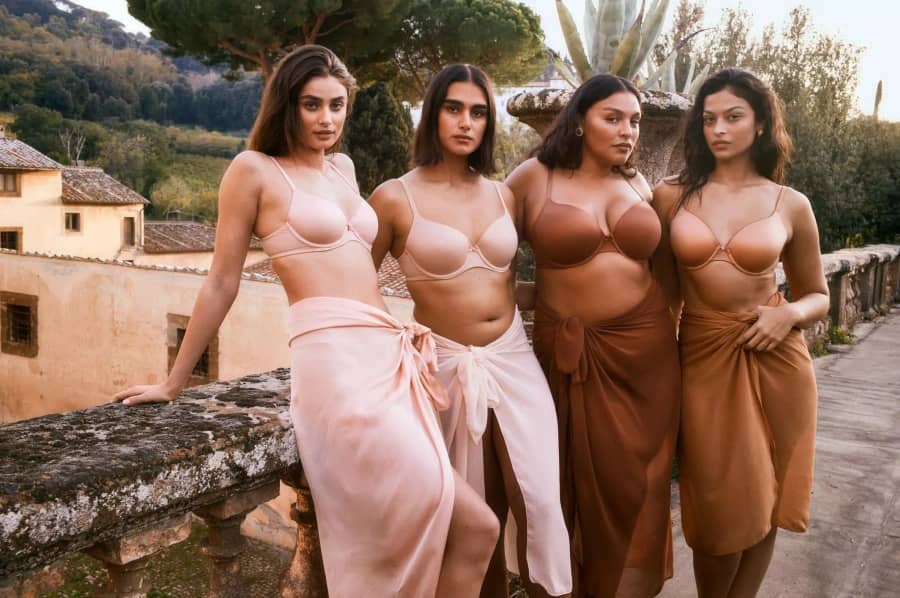
In the 21st century, the perception of beauty continues to evolve, shaped by globalization, social media, and a growing emphasis on inclusivity. The beauty industry has expanded to celebrate a wider range of skin tones, body types, and gender expressions, challenging traditional Eurocentric standards.
As Bruce F. Norton, political science professor at American University, says: “What is considered a beautiful face is often influenced by what is going on in society.”
Social media platforms like Instagram and TikTok have democratized beauty, allowing individuals to share their unique aesthetics and redefine beauty norms. The rise of influencers and beauty bloggers has created a more diverse and dynamic landscape where beauty is no longer dictated by a select few but is a collective, ever-changing dialogue.

Movements like body positivity and gender inclusivity have gained momentum, advocating for a broader definition of beauty that embraces diversity and authenticity. Brands and media outlets are increasingly featuring models and personalities that represent various ethnicities, ages, and body sizes, reflecting a more inclusive approach to beauty.
For most people, a key feature of beauty today is the good-healthy look.
“What all beautiful women today have in common is an obvious look of health,” says Andrea Robinson, beauty editor of Vogue. “Even a model’s skin tone implies she leads a healthy life. This is the look today’s women try to achieve.”
As Scavullo explains of the models he photographs: “Their facial contours are perfect, they have big, intelligent eyes, and a mane of hair. They are healthy. Full of energy.”
The “healthy-is-beautiful” trend started two decades ago, when the pale lips and heavily made-up eyes — the rebellious, Left Bank of Paris look of the 1960s — gave way to a natural, healthy image enhanced by good food, workout gyms and Jane Fonda. A Europeon Vogue cover in the early 1970s featured a model whose tanned face was still wet from a swim. Farrah Fawcett personified the glowing smile of the ’70s. And then came Jane Fonda and the fitness look.
Another important trend today is age. Over the past decade, older models, such as Trish Hooker, appear with increasing frequency in popular magazines.
“We have even had three playmates over the age of 30,” says Playboy’s director of photography, Gary Cole, “and we’ve recently featured a beautiful woman over 50 who was still photogenic.”
Even gray hair is coming out of the closet. “Gray hair is acceptable and always has been,” says Vogue’s Andrea Robinson. “The gray may need enhancing so that it complements the woman’s natural skin tone, but it doesn’t need to be dyed another color.” In general, Robinson says, “there is less stigma attached to middle age these days which affects our ideas of beauty.”
“Beauty,” concludes Tony Shepherd, “is no longer limited to 19-year-olds.”
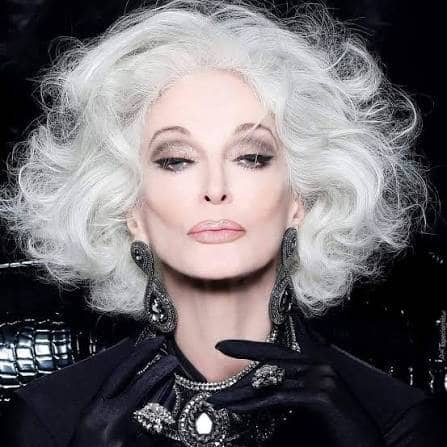
This trend is not surprising in view of the fact that the baby boom generation is now hitting 40 and the fastest growing segment of the population is the elderly.
At the same time, a major part of beauty is sex appeal. High fashion photographer Scavullo states it bluntly:
“Today’s beautiful faces are sexy. Like an animal’s.” And, of course sex appeal is a principal concern of Playboy, which Cole calls a “reflector rather than a setter of trends.”
“When choosing our centerfolds, we look first for a beautiful face,” he explains. “We think readers want to see a face that looks soft and flirtatious. The women in our magazine can’t have a look that is aggressive or unfriendly.”
Yet a countertrend with some models is the aloof look, a “don’t mess with me look” — stark and strong. All this reflects the explosion of opportunities for women and the many conflicting roles women now play. The current trend toward striking and distinctive faces in models pays homage to the individuality of today’s woman. There are many different types of beautiful faces today and a greater tolerance of diversity.
Celebrities became highly influential in the 2000s, so many people started getting plastic surgery to look like them. The era of “monsters refers” began with female celebrities who were successful both financially and sexually
The Modern Face
Today, “high fashion” dictates beauty standards as extremely thin, very tall figures with narrow hips and long legs. However, history changes, and fashion tends to recycle itself. Yesterday’s styles inspire today’s photographers, designers, and filmmakers. As they say, “Everything old is new again.”
Today, women’s beauty standards are in a constant state of flux. Women are now at a point where they can wear whatever they please, experiment with vibrant hair colors, and adorn their bodies with tattoos, taking cues from influential figures like Rihanna or Angelina Jolie. The notion of an ‘ideal’ body shape has dissolved, allowing women to truly embrace their unique forms, a testament to the empowerment they now feel.

In recent years, we’ve made leaps and bounds when it comes to expanding our ideas of what we consider to be “beautiful”. For the first time ever, the media has begun representing women of many different sizes, shapes, complexions, sexual orientations, etc. in their advertising. We still have preconceptions that have been ingrained into our cultural consciousness about who the most beautiful women are, and we still have a long way to go when it comes to accepting that beauty comes in many forms, but I’m optimistic about the coming years.
The Ever-Evolving Concept of Beauty
The perception of beauty has undergone a profound transformation from prehistoric times to the present day. While early humans valued physical attributes linked to survival and fertility, later civilizations celebrated symmetry, proportion, and artistic expression. The Middle Ages emphasized spiritual purity, the Renaissance revived classical ideals, and subsequent periods explored extravagance, realism, and modernism.
Today, beauty is a multifaceted concept that continues to evolve, reflecting societal values, technological advancements, and cultural diversity. As we move forward, the definition of beauty is likely to become even more inclusive and dynamic, celebrating the unique and varied expressions of human identity.
So, what can we learn from this? When it comes to beauty, there is no set of rules. In 100, 200, 300 years from now, the physical qualities that our society glorifies will fall out of fashion and traits that we typically think of as “unattractive” will become the new gold standard. Our perception of beauty is not based in fact, but rather, an ever-changing set of societal opinions that ultimately mean nothing.
Whether you feel that our culture affirms or denies this, you are beautiful. I encourage you to show yourself a little love this week, whether it’s booking a boudoir session, buying a new dress that makes you feel great about your body, meditating, or whatever makes you feel like the best version of yourself.