
The World of Fashion! We say this word as one whole, without thinking about how close its parts are in meaning. Like everything in this world, fashion is in constant motion. Obeying the laws of life and time, it is born, lives, and dies.
The flame of a match slowly ignites, flares brightly, and is extinguished by a strong gust of wind. So it is in the world of fashion. What we once argued about or admired ends up discarded by the ruthless hand of time.
But a new day comes, a new fashion is born. And once again, we are enchanted, outraged, discussing, and admiring—until that once-beloved dress finds its way to the attic, left to gather dust.
Yet even this retirement is not final! Fashion often returns, embellished and slightly transformed, inspiring designers of a new era.
Where Does the Word “Fashion” Come From?
The word fashion has quite the history. It traces back to the Latin word “facere” or “factio”, meaning to make or to do. Over time, this morphed into the Old French “façon”, meaning a way or a manner, and by the late 14th century, it landed in Middle English as fashion, describing style and trends — just as we know it today.
Fashion is more than just clothes — it’s a blend of values, tastes, and habits that shape how people dress, accessorize, and express themselves. It covers everything from lifestyle and etiquette to art, architecture, cuisine, and entertainment. Basically, it’s whatever’s trending in how we present ourselves at a specific time and place.
Fashion design is the art of creating those expressions — from minimal, everyday basics to extravagant statement pieces. Designers don’t just sew fabric together; they craft meaning. They think about color, cut, culture, and creativity, trying to stay in sync with — or ahead of — the pulse of society.
Because trends shift constantly, designers need to stay flexible, imaginative, and socially aware. Fashion isn’t just about looking good; it’s about communicating something through what you wear.
Fashion: More Than Just Looks
Throughout history, fashion has been a powerful tool for identity, status, and rebellion. It reflects who we are, what we believe, and sometimes even what we want to change.
Fashion became a form of nonverbal communication, expressing mood, beliefs, and cultural identity. Think of it like a silent language — what you wear says a lot, even before you speak.
Fashion Today – It Is A Global Powerhouse
Fast forward to today, and fashion is a global, fast-paced industry constantly shaped by technology, cultural shifts, and social change. The clothes we wear now reflect both tradition and innovation. From smartwatches to mushroom leather, what you wear might just be the future.
We can broadly break fashion into a few categories:
- Haute Couture (super high-end, artistic, custom-made)
- Luxury Fashion (prestige brands and fine craftsmanship)
- Ready-to-Wear (designed for real life but still stylish)
- Fast Fashion (affordable and trendy for the everyday shopper)
We’ll dive deeper into those categories here.
Fashion as a Social Mirror
Fashion is always part of our collective mindset. It includes both universal elements that appear across cultures and time periods, and specific ones influenced by local, ethnic, or historical context.
From a sociological lens, fashion is a visual expression of social status and prestige. For older, more traditional groups, that might look like Versace suits, Cartier watches, or a Bentley. For younger crowds, edgy streetwear from brands like Balenciaga or Gosha Rubchinskiy might be the ultimate flex.
Fashion also evolves alongside gender roles. Today, we see women confidently wearing pieces like pantsuits, which were once unthinkable. As gender norms shift, fashion adapts — proving once again that clothing is never just about style.
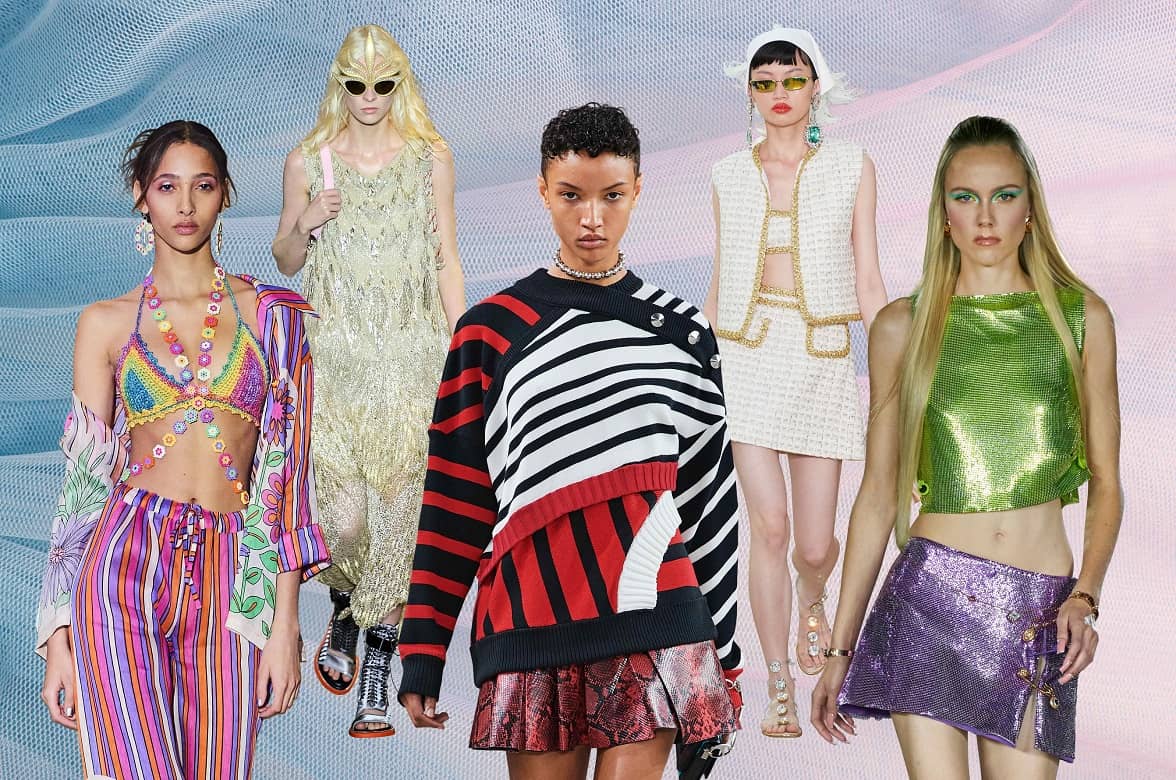
The Social Nature of Fashion: 10 Key Traits
Fashion’s not just about clothes — it’s a social phenomenon. Here’s what defines it:
- Cyclicality – Trends return (hello, 90s revival!)
- Irrationality – Often based on emotion, not logic
- Imitativeness – People mimic elites or influencers
- Demonstrativeness – Clothes signal your “tribe” or class
- Dynamism – It never stands still
- Balance of sameness & uniqueness – Everyone copies and customizes at once
- Universality – Fashion touches everything: not just clothing
- Normativity – What’s “fashionable” aligns with what’s “normal” (for now)
- Semioticity – Fashion is full of signs and meaning
- Mass character – It affects everyone, across classes and communities
Fashion trends are styles or design elements that become widely popular — for a little while or a long time. They’re shaped by everything from culture and economy to technology and environment.
Interestingly, trends tend to flourish when the economy is stable. With more disposable income, people feel freer to buy statement pieces or invest in designer brands. We’ve seen this in countries like China, where luxury fashion is booming.
Trends in a Changing World
Economic growth gives fashion more room to experiment. Designers explore eco-materials (like algae or fungus-based fabrics), rework traditional clothing (like the global rise of the Pakistani shalwar kameez), or reinvent classic silhouettes — like Japanese kimono-inspired designs or Mandarin collars in European couture.
Even technology plays a starring role. We now have:
- 3D-printed fashion
- Smartwatches & wearables
- Eco-conscious fabrics
Social media turbocharges trend cycles. What used to take seasons now goes viral in days. Influencers and bloggers showcase looks, explain how to style them, and suddenly everyone’s in on it. Some trends last — others vanish in a blink. The trick is knowing which is which.
How Trends Are Born
Before a collection hits the runway, it’s already brewing in the atmosphere — shaped by music, politics, film, and society’s mood. Designers are great at spotting those cultural clues and turning them into wearable ideas.
But there’s also a science to it. Trend forecasters study the world — from climate change to pop culture — to figure out what’s on the horizon. Their job helps fashion houses and retailers stay ahead of the curve.
Where Do Trends Come From? 5 Main Sources
1. Runway Shows
Fashion Weeks in New York, Paris, Milan, and London are still the ultimate playgrounds for high fashion. Designers unveil their newest ideas, and the front-row crowd (editors, celebs, influencers) takes note — and spreads the word.
2. Street Style
Forget the runway — real style lives on the street. Cities like New York, Tokyo, and Seoul are hotbeds of creativity. People dress for self-expression, not rules, and that inspires brands and trend-watchers alike.
3. Celebrities
Stars set trends with every red carpet appearance, selfie, or surprise outfit change. Brands love working with them for the guaranteed attention and influence.
4. Fashion Bloggers & Influencers
These modern tastemakers show how to actually wear the trends — mixing high and low, old and new, in a way that feels real and accessible.
5. Fashion Capitals
While fashion can bloom anywhere, the global epicenters — New York, Paris, Milan, and London — are still trendsetting powerhouses. Their Fashion Weeks spark global ripples.

Fashion is Cyclical
Fashion trends have a tendency to return after certain periods of time—typically every 20 to 30 years. However, when old trends make a comeback, they are rarely repeated exactly as they were. Designers adapt them to fit modern technologies, materials, and social conditions.
According to Heuritech, a service that specializes in forecasting fashion trends using AI, the emergence of innovative technologies and social media has drastically shortened the life cycle of fashion trends. Innovations in design and merchandising have significantly accelerated the time it takes for a product to reach the market, and thanks to social media, trends can now appear and disappear overnight.
How the Trend Cycle Works
Fashion is often said to be cyclical. Every 10–15 years, the same ideas reappear on the runway. The items already exist in the market and on the streets, but a designer or stylist with a fresh perspective breathes new life into them. A great example is the boho-chic style. For a while, the bohemian (boho) and hippie aesthetic seemed completely outdated, but last year, fringe dresses, pastoral blouses, and suede jackets made a surprising comeback.
Stage 1: Introduction
The first stage of a trend’s life cycle is the introduction. The life cycle of a fashion trend typically begins with a small group of people who are considered to be trendsetters. These individuals are considered “early adopters” and tend to be those who are highly influential within the fashion industry (think the high fashion “it” girls). So when a trend first emerges, fashion enthusiasts begin incorporating it into their everyday looks. People at work, in universities, and on the street start to notice. The trend’s popularity begins to build.
Stage 2: Rise
Once a trend is introduced, it gradually begins to gain popularity throughout the fashion industry as more and more people start to adopt it. This is usually followed by a rapid increase in popularity, known as the rise stage. The trend gains momentum and is now being acknowledged and accepted, creating consumer demand. It’s at that point that we regular folks are ready to partake.
Stage 3: Peak
Eventually, the trend will reach its peak, at which point it will begin to decline in popularity. When a trend reaches the peak stage of the trend cycle, it has become fully saturated in the general public. Many consumers are wearing the trend and retailers have replicated it. The trend is available through mass production at a wide range of price levels. At the peak stage, the trend is no longer seen as new or edgy.
Once it reaches its peak, it’s no longer just seen on style icons — it shows up on high school students, grandmothers wanting to feel youthful, and people in line at the grocery store. At that point, the trend loses the cutting-edge appeal that originally made it popular.
Stage 4: Decline
Then at about year 6-7, the trend has become saturated, and begins to decline. People gradually move on to something new. Sometimes the trend disappears completely, while other times it quietly fades before coming back with a fresh twist. Now, again, for us regular folks, and even for “it” girls, we can still keep wearing the trend for another 3-4 years. And wearing it with confidence. However, this decline stage is when we recommend no longer investing heavily into the trend. At this point, it does not allow for enough return on investment.
Stage 5: Obsolescence
As the trend becomes less popular, it may eventually become obsolete. However, some trends manage to avoid obsolescence and enjoy a second life cycle after being revitalized by a new generation!

The rise of innovative technologies and social media has significantly shortened the trend cycle, making trends come and go faster than ever before.
Fashion and Social Media
Social media plays a massive role in the fashion world, significantly influencing the spread and promotion of fashion trends. Platforms like Instagram, Facebook, and Pinterest have become central to showcasing and discussing the latest styles and innovations.
Bloggers and influencers have a major impact on the fashion industry. They not only showcase new trends but also shape their followers’ opinions on brands and products. Their recommendations and reviews often act as guides for fashion-conscious audiences.

These new “style icons” use their platforms to interact with audiences, offering styling tips and ideas. They also collaborate with fashion brands to promote clothing, accessories, and beauty products—leveraging their influence to attract consumers.
The impact of social media on fashion cannot be underestimated. It provides a platform for sharing ideas and trends, making fashion more accessible and inclusive. Social media not only expands the boundaries of the fashion industry but also transforms how brands engage with their audiences.
Fashion plays a key role in shaping the cultural landscape of modern society. It doesn’t just reflect current trends and social changes—it actively contributes to the creation of new cultural codes and identities. Fashion is not just about clothing; it’s a language we use to express ourselves, our beliefs, and our views of the world.
Looking to the future of fashion, we can expect it to continue evolving toward sustainability and inclusivity. The future will focus on more responsible, eco-friendly production methods, and on embracing the diversity and individuality of every person.
Fashion’s influence on society will continue to grow, as it adapts to changing social norms and technological innovations. We are entering a new era where fashion will not only satisfy aesthetic desires but also serve as a force for greater social good and sustainable development.
Fashion isn’t just about what’s “in” — it’s about how we see ourselves, how we want to be seen, and how we respond to the world around us. Whether you’re into haute couture or thrift finds, fashion is a tool of expression, a cultural mirror, and a creative playground.
Wear what you love. And if you start a trend along the way — even better.