
Self-development is an ongoing process of personal growth. It means strengthening your abilities, expanding your knowledge, and developing qualities that help you reach your goals and create a more meaningful life. At its heart, self-development is about movement. You keep learning, adjusting, and discovering new things about yourself instead of simply letting life carry you along.
The purpose is simple, even if the journey itself can be challenging. You want to become a better version of yourself while staying true to who you are. That does not mean becoming perfect or trying to turn yourself into somebody else. It means becoming more aware, capable, confident, and connected to what genuinely matters to you. You might focus on your professional skills, while someone else works on emotional intelligence, creativity, relationships, or physical health. There is room for all of it.
If you have ever asked yourself, “Why does self-development even matter?”, that question may already be a sign that you are ready to grow. Once personal growth becomes something you consciously pursue, it can influence almost every other goal in your life. You become more willing to learn, more aware of your choices, and more prepared to take action. Growth encourages motivation, and that motivation often sends you back to growth.

Many experts emphasize the value of self-development because it can affect many areas of everyday life. A small improvement in one area can sometimes create changes somewhere else that you did not expect.
Think about communication, for example. If you learn to express yourself more clearly at home, you may also become more confident when speaking at work. When you develop better work habits, you might find that you have more time and energy for your personal life. Growth rarely stays in one neat category. What you learn in one part of your life often follows you into another.
Knowledge Becomes Useful When You Put It Into Practice
One of the most important parts of self-development is practice. You can read dozens of books and watch hundreds of lectures, but information alone does not change the way you live. Knowledge starts to matter when you use it.
You read about setting personal boundaries, for instance, and then find yourself saying “no” instead of agreeing to something simply because you feel guilty.
You start learning a new language, and one evening you switch on a television show without subtitles. Suddenly, you realize you understand far more than you expected.
You discover a few time-management techniques and begin planning the next day the night before. Your mornings become less rushed, and you have a clearer idea of what needs your attention.
You watch a lecture about emotional intelligence, and the next time an argument starts, you pause before responding. Instead of reacting immediately, you take a breath and think about what you really want to say.

Financial literacy can work in much the same way. You learn about saving and budgeting, then open a savings account, automate a small transfer, or finally create a budget that gives you structure without making you feel trapped.
The same principle applies to health. You read about healthy habits and begin taking a 20-minute walk every day. After a while, you notice that your mood and energy have changed.
Perhaps you become interested in creativity and start carrying a small notebook so you can write down ideas, sketches, or thoughts whenever they appear. You might take an online communication course and try a new technique during a work presentation.
Or you could learn something practical, such as cooking or photography, and immediately use that knowledge to make something of your own. Even mindfulness becomes more meaningful when it moves beyond theory. You notice yourself getting caught in a cycle of negative thoughts, recognize what is happening, and gently bring your attention back to the present.
These small actions are where self-development really happens. They turn information into experience. Over time, repeated actions become habits, habits influence the way you think, and those changes can gradually shape how you see yourself.

As you continue, you also begin to understand yourself better. You notice what interests you, what you are naturally good at, what drains you, and what you want to explore next. Having a clearer sense of direction can make it easier to choose work you enjoy, develop professionally, and build relationships with people who share your values and outlook.
So Why Is Self-Development Necessary?
We live with constant change around us. Technology develops, industries shift, workplaces change, and social expectations evolve. Trying to keep up with everything can be exhausting. Self-development gives you a way to remain adaptable without feeling that you have to chase every new trend. You continue learning, stay curious, and build the ability to adjust when circumstances change. Most importantly, you can do this at your own pace.
As you develop, your intellectual and analytical abilities can become stronger. You may start recognizing patterns more easily, understanding your own behavior more clearly, and looking at situations from more than one angle. With greater self-understanding often comes greater confidence, and these changes can affect how you experience everyday life. There are practical benefits as well. In a fast-changing working environment, continuing to learn can help you remain flexible and expand the choices available to you.
Career Growth
Career development is one of the most visible benefits of continuous learning. Improving your skills, developing personal qualities, and continuing your education can make it easier to adapt when your work changes.
Every new skill can give you another option. You might advance in your current role, move into a different profession, negotiate better pay, relocate, or start a new project. The more you know and the more you can do, the more possibilities you have when making career decisions. Knowledge can create mobility. It gives you more freedom to decide where you want your professional life to go instead of feeling completely dependent on circumstances.
Setting Goals and Reaching Them
Self-development can also make long-term goals feel more manageable. As you learn more about yourself, you become better at deciding what you actually want and breaking large ambitions into smaller steps. Perhaps you want to earn a degree, improve your fitness, learn an instrument, or become highly skilled at a particular craft. Instead of trying to change everything at once, you can create a path and work along it gradually.

Continuous learning can also introduce you to opportunities that might otherwise have remained outside your field of vision.
Mental and Emotional Well-Being
Personal growth can also influence mental health and emotional well-being. Learning to manage stress, understand your emotions, and pay attention to your inner world can help you deal with difficult situations more thoughtfully.
Emotional intelligence can make relationships easier to navigate because you become more aware of your own reactions and more sensitive to what others may be experiencing. You may find it easier to have difficult conversations, listen without immediately becoming defensive, and communicate what you need.
As your understanding of yourself grows, feelings of helplessness and self-doubt may also become easier to manage. You begin to recognize that emotions are experiences you can work with rather than instructions you must always follow.
Healthier Relationships
Relationships naturally change when you change. Better communication, empathy, and emotional awareness can help you build stronger connections with the people around you.
You may listen more carefully instead of preparing your response while someone else is talking. You may learn to express your feelings more directly or handle disagreement without turning every conflict into a personal battle. Over time, these small changes can create more honest and supportive relationships, both at home and at work.
Becoming More Adaptable
Life rarely follows a perfectly predictable plan. Careers change, relationships develop, plans fall through, and unexpected problems appear. Self-development can make these moments easier to handle because you become more confident in your ability to learn and adjust.
When you trust that you can acquire new skills and find another way forward, uncertainty may feel less overwhelming. Change then becomes something you can respond to rather than something that automatically throws you off balance.
Building Everyday Life Skills
Many of the abilities developed through self-development are useful far beyond a classroom or workplace. Time management, problem-solving, communication, and critical thinking all affect the way you handle ordinary situations. As you continue learning, your view of the world can also become broader. You encounter different ideas, cultures, experiences, and ways of thinking. This can make you more informed and more comfortable with perspectives that differ from your own.
Self-Awareness Comes First
At the center of all this is self-awareness. The more you learn about yourself, the easier it becomes to recognize your strengths, weaknesses, values, and beliefs. That awareness can help you make choices that fit who you are instead of constantly trying to meet an image of who you think you are supposed to be. Once you understand yourself more clearly, your direction often becomes clearer too. And when you have a sense of direction, you can begin to develop a stronger sense of purpose.
Finding a Sense of Purpose
Purpose often grows from understanding what matters to you. When your daily actions are connected to your values, interests, and goals, ordinary activities can feel more meaningful. You may discover that fulfillment comes from creating something, helping others, learning, building a family, developing a career, exploring the world, or combining several of these things. There is no single definition that works for everyone. What matters is that your life begins to feel connected to something you genuinely care about.

Confidence Grows Through Action
Self-confidence tends to develop through experience. Each new skill you learn and each challenge you manage gives you another reason to trust yourself. Confidence does not mean that fear disappears. You can still feel nervous and uncertain while choosing to move forward. With practice, stepping outside your familiar routine becomes less intimidating, and you begin to discover that you can handle more than you once thought.
Discovering What Truly Interests You
Self-development can also clarify your interests. You may eventually realize that certain paths, environments, or activities simply do not suit you. As you learn more about yourself, you can move toward things that fit your values and curiosity. Your social circle may change along the way too. New people may enter your life, particularly those who are also learning, exploring, and growing. That does not mean every old relationship has to disappear. It simply means that your interests and priorities can change, and your relationships may change with them.
Staying Curious for the Long Term
One of the most valuable results of self-development is the habit of continued learning. You stop thinking of yourself as someone who has already reached the end of the road and remain open to new experiences and ideas. You question old assumptions, explore unfamiliar subjects, and keep your mind engaged. Every new area you explore can lead to another question, another skill, or another possibility.
Growth Can Reach Beyond You
The effects of self-development do not necessarily stop with you. When you become more aware, responsible, resilient, and thoughtful, the people around you may notice the difference. You can influence others simply through the way you live and respond to challenges. In families, workplaces, and communities, one person’s growth can sometimes encourage another person to begin their own.
A Greater Sense of Life Satisfaction
Finally, continued growth can contribute to a stronger sense of satisfaction with life. Exploring new interests, reaching milestones, and seeing evidence of your own progress can be deeply rewarding. You begin to see that you are capable of learning things that once seemed difficult and changing habits that once felt permanent. That experience can create motivation to keep going.
An active mind also stays curious and engaged. Learning keeps the brain challenged and can support memory, attention, and other cognitive abilities. And that brings us to a deeper question: why does our brain seem to need stimulation and novelty in the first place?
Why Do We Need Continuous Stimulation?
The answer begins deep inside the brain. Human brains are remarkably adaptable systems, designed to respond to new information and changing surroundings. From the earliest stages of life, we process what is happening around us, adjust to new situations, and build connections between experiences. Every thought, movement, memory, and decision depends on networks of neurons communicating with one another. These connections help shape how we learn, remember, speak, solve problems, and respond to the world around us.
Psychologists have long studied our need for connection as well as our motivation to explore and experience something new. In her work on children’s developmental needs, psychologist Mia Kellmer Pringle identified both the need for love and security and the need for new experiences as important aspects of healthy development. Later, other psychologists Arthur Aron and Elaine Aron developed self-expansion theory, which proposes that people are motivated to expand their sense of self through new knowledge, skills, perspectives, and experiences. Together, these ideas help explain why we seek both meaningful relationships and opportunities to learn, explore, and grow.
Think about what happens when every day looks exactly the same for months. Even if nothing is seriously wrong, life can begin to feel flat. Without enough new experiences or mental challenges, motivation may decline and curiosity can fade. Our minds need something to explore.
The brain’s reward system has a lot to do with this. Dopamine, a neurotransmitter involved in motivation, learning, and reward, is released in response to experiences that the brain finds rewarding, including novelty and learning. When you solve a problem, understand a difficult idea, or finally master a new skill, you may experience that satisfying feeling of progress. That feeling can encourage you to continue. You learn something, enjoy the sense of achievement, and become curious about what you might be able to learn next.
The Brain Areas Involved in Learning and Growth
The prefrontal cortex is especially important when it comes to planning, decision-making, self-control, and thinking about the future. When you explore a new idea, compare different possibilities, or decide how today’s actions might affect tomorrow, this part of the brain is involved.
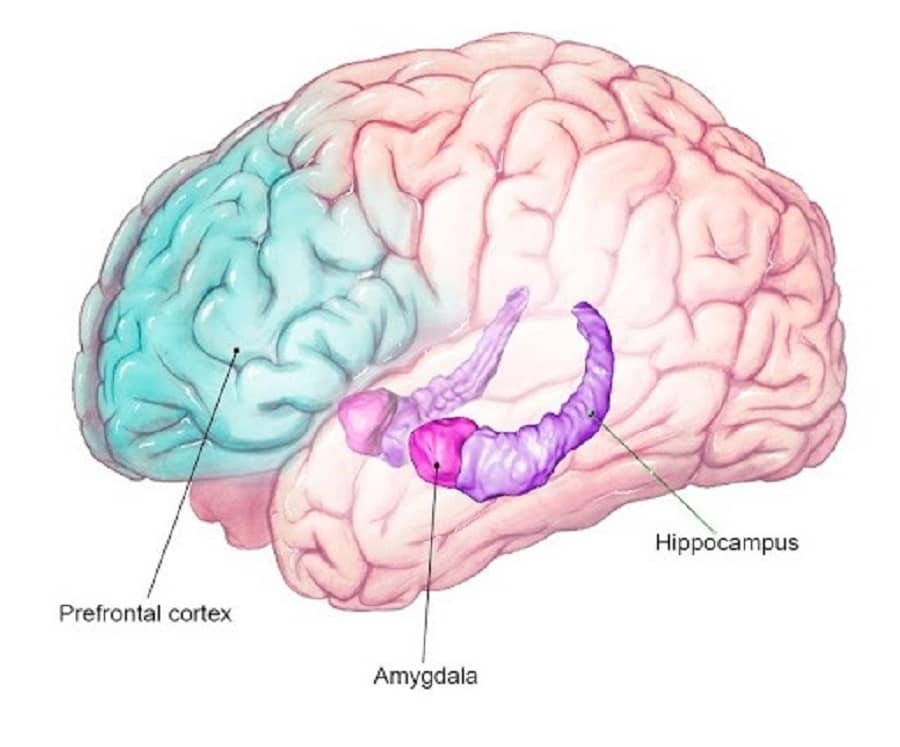
Learning and self-development therefore give you regular opportunities to exercise the mental processes that help you plan and make deliberate choices rather than simply reacting to whatever happens around you.
The hippocampus also has an important job. As part of the limbic system, it helps form and retrieve memories and supports learning from experience. It also helps us navigate unfamiliar environments.
Whenever you enter a new situation, whether you move to a different city, begin a new job, learn a new skill, or start looking at an old problem in a different way, your brain has to process unfamiliar information and connect it with what you already know.
And then there is neuroplasticity, one of the brain’s most fascinating properties. Neuroplasticity refers to the brain’s ability to change and reorganize by forming and strengthening neural connections. In practical terms, this means that your brain is capable of change throughout life. You are not permanently fixed by your age, background, or past experiences. Learning, practice, reflection, and new experiences can all influence the way neural networks develop and function.
Self-Development Has a Biological Side
When we talk about self-development, it can sound like a purely philosophical idea. But there is also a biological side to learning and adaptation. Curiosity has been useful throughout human history. Early humans had to pay attention to their surroundings, learn from experience, experiment with tools, recognize danger, find food, adapt to new environments, and pass useful knowledge to others.
The circumstances have changed, but the basic drive to explore and learn remains. Today, that drive may appear in very different forms. You might learn how to use new technology, study another language, change careers, explore a new field, learn to cook, take up photography, or simply try to understand a subject that has always interested you. The basic process is similar. You encounter something unfamiliar, your brain processes it, you connect it with what you already know, and with practice, the unfamiliar gradually becomes familiar.
Why Continuous Learning Matters Today
Our surroundings can change quickly. Technology develops, jobs evolve, industries shift, and social expectations change. Continuous learning can help you respond to these changes without becoming completely dependent on what you already know.

When you remain willing to learn, you have more opportunities to update your skills and reconsider old assumptions. Your ability to absorb information, adjust your thinking, and learn from other people supports your own development and can also contribute to progress in the wider community.
Each generation inherits knowledge from the previous one and adds something of its own. That is one reason continuous stimulation matters. Curiosity keeps the mind engaged with life. When you nurture that curiosity through learning and new experiences, you can develop greater mental flexibility, emotional awareness, social skills, and resilience. Instead of moving through the same routines without thinking about them, you remain involved in what is happening around you.
Growth Also Requires Rest
There is, however, another side to continuous development. You do not need to be learning something new every minute of every day. Self-development should leave you feeling more capable, not permanently exhausted. If every day becomes another test of productivity and improvement, growth can turn into pressure, and too much pressure can contribute to burnout.
Your brain needs rest as well as stimulation. It needs time to process experiences, consolidate learning, and simply be quiet. Sometimes a walk, an evening without screens, a good night’s sleep, or a period of doing nothing productive gives your mind the space it needs to absorb what you have already learned.
Growth happens through action, but it also happens during pauses.
Learning to Handle Difficult Times
Self-development cannot prevent any hardship. Life will still bring uncertainty, disappointment, loss, and unexpected changes. What personal growth can do is help you respond to those experiences with greater resilience. When you understand your strengths and accept that you also have limitations, difficult situations may become easier to put into perspective.
A setback does not automatically mean that you have failed. Sometimes it simply shows you that something needs to change. Over time, you may begin to see challenges as experiences you can learn from rather than final judgments about your ability.
Building Quiet Confidence
This process can create a different kind of confidence. It is not the loud feeling that you can control everything. It is the quieter belief that you will find a way to deal with whatever comes next. You have already experienced situations that once seemed difficult, learned things you once did not know, and adapted to circumstances you could not have predicted. Those experiences become evidence that you can learn and recover. As that confidence grows, obstacles may feel less overwhelming because you have developed trust in your own ability to respond.
Growth Takes Time
Becoming the best version of yourself does not happen overnight. It develops gradually through repeated effort, small choices, mistakes, reflection, and practice. There will be days when you feel motivated and days when you do not. There will be periods of rapid progress and times when you seem to be standing still.
That is part of the process. What matters is continuing to learn and adjust rather than expecting constant improvement. Over time, the results can be substantial: greater clarity, deeper fulfillment, stronger resilience, and a stronger sense that you have some ownership over the direction of your life.
You Don’t Have to Grow Alone
Self-development also does not have to be a completely solitary process. Books, podcasts, courses, mentors, teachers, and workshops all exist because people have always learned from one another.

Asking for guidance does not make you less independent. In many cases, it helps you become more independent because you gain knowledge and perspectives that allow you to make better decisions for yourself. You can learn from someone else’s experience without simply copying their life.
Learning to Look at Change Differently
Eventually, continued growth can change the way you see uncertainty itself. You begin to accept that hardship is part of life while also recognizing that difficult circumstances do not necessarily determine what happens next. A new situation may still be uncomfortable, but you have more reason to believe that you can learn what you need, adjust your approach, and move forward. That can create a more grounded form of optimism. You are not assuming that everything will work out exactly as planned. You are trusting that you can continue growing even when things do not go according to plan.
Self-development is a lifelong relationship with yourself. It means continuing to learn, reflect, adapt, and make conscious choices about the direction of your life. Sometimes it looks like learning a new skill. Sometimes it means becoming more aware of your emotions, taking better care of your body, improving a relationship, changing an old habit, or simply looking at a familiar situation from a new perspective.
The more you invest in your own development, the more clearly you may understand who you are, what matters to you, and how you want to respond to the world around you. You gain skills, but you also gain perspective, resilience, and a greater sense of choice.
There is no final point where you can say, “That’s it, I’ve finished growing.” Life keeps changing, and so do you. That is part of what makes self-development meaningful. You can begin wherever you are, with whatever you have. You do not need to change your entire life in one day. One useful idea, one new habit, one honest conversation, or one small action can be enough to start.
Over time, those choices add up. You learn, adjust, make mistakes, try again, and gradually become more capable of creating a life that feels genuinely yours.