
The Most Common Sources Of Antioxidants
Various health establishments suggest eating 5 portions of fruits and vegetables of different colors … on a daily basis. The aim of this is to supply the required essential nutrients your body needs daily. The good news is, this will also give you as much anti-oxidants as possible and also the diversity of anti-oxidants you need.
Antioxidants have the capability to resist and nullify the effect of free radicals. They also decrease the effect caused by oxidative damage. In other words, they scavenge the free radicals.
Our body is able to produce some of these anti-oxidants, yet other antioxidants should be consumed through the diet.
There are three sources of anti-oxidants. First, several metabolic enzymes produced by the body–glutathione peroxidase, superoxide dismutase, and catalase—are extremely effective antioxidant scavengers. (1)
[bullet_block style=”size-16″ small_icon=”4.png” width=”” alignment=”center”]
- Catalase coverts hydrogen peroxide into water and oxygen.
- Superoxide dismutase breaks anti-oxidants down into hydrogen peroxide.
- Glutathione is a detoxifying agent, changing the form of toxins so that they are easily eliminated by the body.
[/bullet_block]
Second, many foods and plants provide powerful anti-oxidants. Among these are vitamins E and C , beta carotene (but only in their natural full-complex forms) and the proanthocyanidins or flavonoids (including grape seed and green tea extract).
Here is a list of a few important dietary anti-oxidants:
[bullet_block style=”size-16″ small_icon=”4.png” width=”” alignment=”center”]
- Vitamin C: One of the most vital water-soluble anti-oxidants and a critical dietary nutrient. It is useful for the synthesis of collagen, which aids in making blood vessels and body muscles strong. The human body doesn’t have the capacity to generate Vitamin C. Consequently, it needs to be received through food and other supplements.
- Vitamin E: The main fat-soluble antioxidant that plays a crucial role in protecting cell membranes against oxidative impairment. It is an important vitamin that is essential for the proper function of many organs in the body and is exceptionally beneficial in naturally slowing aging.
- Vitamin A: Fat soluble antioxidants. Beta Carotene is perhaps the best known of the carotenoids, and is converted by the body into vitamin A as needed to reinforce the immune system and stimulate healthy cell growth
- Flavonoids: A large group of antioxidants found in plant foods. They have many favorable health effects. Diets rich in flavonoids have been associated with reduced risk of a variety of illnesses. It provides an anti-inflammatory effect, decreasing cancer and Heart Disease Risk. (2)
[/bullet_block]
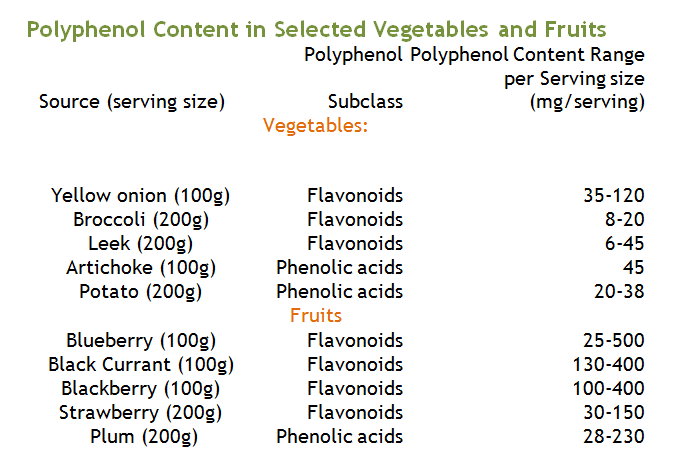
Broccoli, greens, beans, artichokes, and onions, to name a few, are good sources of polyphenol flavonoids.
Here’s a great table showing examples of fruits and vegetables along with their polyphenol content that will help you defuse free radical damage. This table also shows another valuable subclass of polyphenols called phenolic acids.
And finally, cutting edge research is recurrently discovering new antioxidants in foods and plants from around the globe—as well as synthesizing them in the laboratory.
The best known sources of anti-oxidants that should be consumed with a daily diet are fruits and vegetables. Natural antioxidants are as important to plants as they are to humans for preventing oxidative stress and harm from UV light. Numerous types of natural anti-oxidants are needed to uphold the multifaceted system that averts cell damage and death. Many substances that happen to be anti-oxidants can also have other significant purposes.
Plant foods are great sources of antioxidants and are most plentiful in fruits and vegetables. They are also abundant in other foods such as nuts, wholegrains and some meats, poultry and fish.
Good sources of specific antioxidants are comprised of:
[bullet_block style=”size-16″ small_icon=”17.png” width=”” alignment=”center”]
- allium sulphur compounds – leeks, onions and garlic
- anthocyanins – eggplant, grapes and berries
- beta-carotene – pumpkin, mangoes, apricots, carrots, spinach and parsley
- catechins – red wine and tea
- copper – seafood, lean meat, milk and nuts
- cryptoxanthins – red capsicum, pumpkin and mangoes
- flavonoids – tea, green tea, citrus fruits, red wine, onion and apples
- indoles – cruciferous vegetables such as broccoli, cabbage and cauliflower
- isoflavonoids – soybeans, tofu, lentils, peas and milk
- lignans – sesame seeds, bran, whole grains and vegetables
- lutein – green, leafy vegetables like spinach, and corn
- lycopene – tomatoes, pink grapefruit and watermelon
- manganese – seafood, lean meat, milk and nuts
- polyphenols – thyme and oregano
- selenium – seafood, offal, lean meat and whole grains
- vitamin A – liver, sweet potatoes, carrots, milk, and egg yolks
- vitamin C – oranges, blackcurrants, kiwifruit, mangoes, broccoli, spinach, capsicum and strawberries
- vitamin E – vegetable oils (such as wheatgerm oil), avocados, nuts, seeds and whole grains
- zinc – seafood, lean meat, milk and nuts
- zoo chemicals – red meat, offal and fish. Also derived from the plants that animals eat
[/bullet_block]
Most of the vegetables you eat are full of powerful phytochemicals that act as antioxidants. And the closer they are to being harvested, the more potent these anti-oxidants will be—which is why you should consume the majority of your fruits and vegetables raw and locally picked. As well, research shows that certain organically grown fruits and vegetables have pointedly higher levels of potent anti-oxidants than conventionally grown foods.
Public health organizations constantly recommend that we eat 5-13 servings of fruits and vegetables per day, since they are rich in antioxidants and are an excellent source of dietary fibers.
[feature_box style=”14″ only_advanced=”There%20are%20no%20title%20options%20for%20the%20choosen%20style” alignment=”center”]
NOTE: There is no RDA or Daily Value set for anti-oxidants.
[/feature_box]
Natural antioxidants are also found in whole grains. In particular, barley and oats should be included, if a person wants a rich anti-oxidant diet.
The American Cancer Society focuses, in part, on the significance of food sources of antioxidants found in fruits, vegetables and whole grains for cancer prevention.
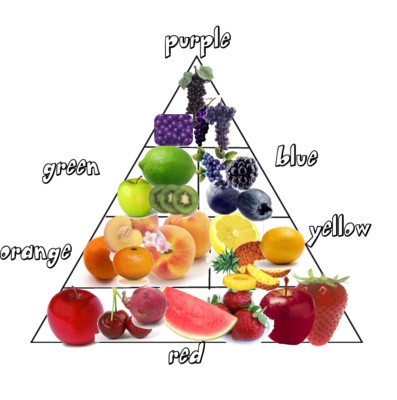
It is sensible to eat a variety of natural food to get various types and amounts of antioxidants. They are best taken in combination, since single anti-oxidants, such as vitamin E, need other vitamins in order to work as an effective anti-oxidant.
Let me explain one of the many reasons of joining them as opposed to focusing on single antioxidant. The great thing about antioxidants is that they can give these free radicals an electron – neutralizing— stabilizing them. While releasing an electron, the anti-oxidant has become a free radical itself (although a less dangerous one). This means that the antioxidant needs to be regenerated and it does this by borrowing an electron from another anti-oxidant. This regeneration becomes a constant process as long as there are ample anti-oxidants available.
This is why we need a fresh supply of different antioxidants; because some of them will only be regenerated by other specific antioxidants. So if you only get one type of antioxidant, like vitamin D, then you are actually not doing yourself any favors. This is because it will become a free radical itself, and with little other antioxidants around to regenerate it, it will damage your cells.
As well, some antioxidants may only work in certain parts of the body. For example, vitamin C is concentrated in blood plasma, connective tissues and within the cytoplasm of cells. So each antioxidant is highly classified, like having its own zone of defense – like football. Thus you need a large range of anti-oxidants.
Bottom-line: antioxidants work best taken as a “group” …therefore, it is advisable to eat a variety of antioxidants rather than just take one or two types. Food and natural supplements may therefore provide the most bio-available source of anti-oxidants.
[feature_box style=”14″ only_advanced=”There%20are%20no%20title%20options%20for%20the%20choosen%20style” alignment=”center”]
NOTE: It is vital to mention that cooking can destroy some antioxidants and interferes with the body’s ability to absorb them, so eating raw vegetables and fruit, and including sprouts in the diet can help. Steaming vegetables as opposed to frying, microwaving or boiling is also a good idea.
[/feature_box]
[divider style=”10″]
You may also like:
Free Radicals: Enemies Within. What Are They And How Are They Formed
Understanding Antioxidants. How Do They Work?
Classification Of The AntiOxidants
How Antioxidants Affect Our Health In General
How You Can Rate The Best Antioxidant? Is ORAC Score A Useful Tool?
How Can We Recognize Antioxidant Rich Food?